How to Check a Fire Extinguisher at Home: Pressure, Condition, and When to Replace It

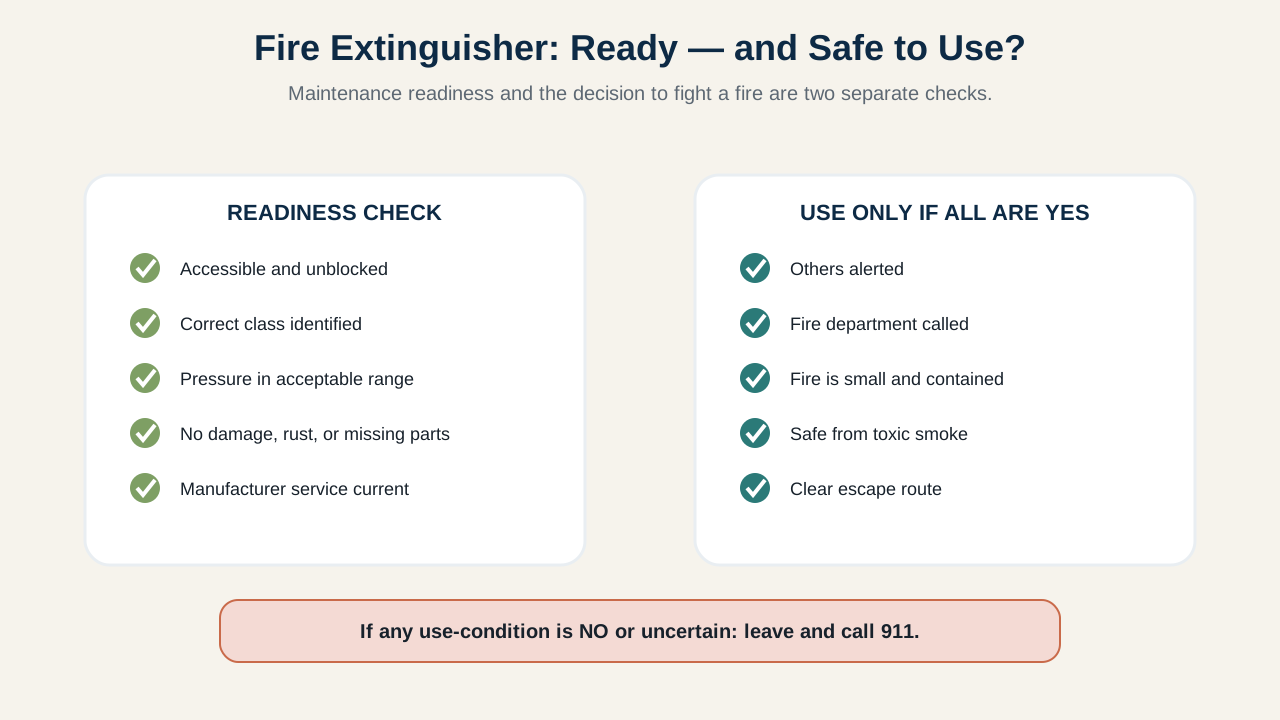
Check that your fire extinguisher is accessible, shows the correct class for the hazard it protects, has a pressure gauge reading in the operable range, and shows no visible damage; because extinguishers don't share one universal replacement interval, follow the manufacturer's or servicer's maintenance instructions, and only attempt to fight a small, contained fire if you've alerted others, called the fire department, are physically able, have a clear escape route, and are not in danger from smoke -- otherwise, evacuate and call 911.
A fire extinguisher can sit untouched for years and still look reassuring.
That does not mean it is ready to work.
The U.S. Fire Administration tells homeowners to check extinguishers for easy access, proper pressure, intact working parts, cleanliness, and the maintenance instructions specific to the unit. Some extinguishers can be recharged. Others need replacement when pressure is low or the unit reaches the manufacturer’s service limit.
The homeowner job is simple:
Identify the extinguisher → confirm it is accessible → check pressure and condition → read the label → know when not to use it.
The last step matters as much as the inspection.
A fire extinguisher is for a small, contained fire when you have a clear escape route and the situation is otherwise safe. It is not a reason to remain in a dangerous building.
The short answer
USFA’s homeowner guidance says to check a fire extinguisher for:
- easy access in an emergency;
- the recommended pressure level, when the unit has a gauge;
- damage, dents, rust, or problems with the hose and nozzle;
- dirt, oil, or grease on the outside;
- the manufacturer’s inspection and maintenance instructions.
Some extinguishers require periodic service, pressure testing, shaking, recharging, or replacement depending on the design.
Do not invent a maintenance interval from memory.
Read the label and manufacturer instructions for your exact unit.
And before ever deciding to fight a fire, USFA says you should have alerted others, have someone call the fire department, be physically able to use the extinguisher, face only a small and contained fire, be safe from toxic smoke, and have a clear escape route.
If any of those conditions is missing, leave and call 911.
Start by Identifying What You Own
Fire extinguishers are not all the same.
USFA describes five primary classes based on the type of fire the extinguisher is designed to address:
- Class A: ordinary combustible materials such as wood, cloth, and paper;
- Class B: flammable and combustible liquids;
- Class C: energized electrical equipment;
- Class D: combustible metals;
- Class K: cooking oils and fats.
Many household extinguishers combine more than one rating, such as A:B:C.
The letters on the label matter because an extinguisher must be suitable for the type of fire you might face.
Do not assume that every red cylinder is appropriate for every fire.
Record the class rating, manufacturer, model, and instructions when you create your home-safety baseline.
Check Whether You Can Reach It Quickly
USFA lists easy access as one of the first maintenance checks.
The extinguisher should not be buried behind storage, blocked by furniture, hidden in a locked cabinet you cannot open quickly, or placed where routine household clutter can make it unreachable.
The objective is not to create a decorative display.
It is to know where the extinguisher is and be able to reach it without delay.
At the same time, access does not mean placing it where young children can treat it as a toy.
The manufacturer instructions and local fire department can help if you are unsure about storage or placement for your particular home.
Check the Pressure Indicator
Many rechargeable or stored-pressure extinguishers have a pressure gauge.
USFA tells homeowners to check that the extinguisher is at the recommended pressure level.
On many household units, the gauge has a normal operating zone and areas that indicate pressure that is too low or too high.
Do not assume the meaning from the colors alone if the label is unclear.
Read the manufacturer’s instructions.
If the gauge shows the extinguisher is outside the acceptable range, do not simply leave it in place because the pin and handle still look normal.
Follow the manufacturer’s service, recharge, or replacement instructions.
Some disposable extinguishers are not designed to be recharged.
Inspect the Cylinder, Hose, Nozzle, and Handle
USFA recommends checking the working parts for damage.
Look at the extinguisher without disassembling it.
Check for:
- significant dents;
- corrosion or rust;
- a damaged hose;
- a blocked or damaged nozzle;
- a broken handle or lever;
- missing or damaged safety pin or tamper seal;
- evidence that the unit has discharged;
- obvious leakage or other physical damage.
Do not loosen fittings, remove valves, or test-discharge the extinguisher just to see whether it works.
Discharging even part of some extinguishers can require service or replacement.
If the unit looks damaged or has been used, follow the manufacturer instructions or take it to a qualified fire-extinguisher service provider.
Keep the Outside Clean
USFA recommends removing dust, oil, or grease from the outside of the extinguisher.
That sounds minor, but the label, gauge, pin, handle, hose, and instructions need to remain readable and usable.
Wipe the exterior as the manufacturer allows.
Do not apply solvents, coatings, paint, tape, or decorative covers that hide instructions or interfere with operation.
The extinguisher is safety equipment, not a surface to customize.
Read the Maintenance Instructions on the Unit
This is where generic schedules stop being useful.
USFA notes that some extinguishers need to be shaken monthly, while others need pressure testing every few years. Some can be recharged. Others need replacement if pressure is low.
Those differences come from extinguisher design and manufacturer requirements.
So create a record for each extinguisher:
- manufacturer;
- model;
- class rating;
- rechargeability;
- inspection guidance;
- pressure-test or service interval if applicable;
- replacement date or service-life instruction if provided;
- last professional service date, if any.
Do not copy the schedule from a different extinguisher in the house.
Do Not Pull the Pin as a Routine Test
A smoke alarm has a test button.
A fire extinguisher does not work the same way.
The inspection is based on condition, pressure, accessibility, and manufacturer maintenance requirements.
Do not pull the pin and squeeze the handle for a “quick test” unless the unit’s official instructions specifically call for a discharge test conducted in an appropriate service context.
Once an extinguisher discharges, it may need professional recharge or replacement.
A good inspection leaves a serviceable extinguisher ready for an actual emergency.
When Should You Replace or Service It?
There is no single replacement age that applies to every home extinguisher.
The correct answer depends on the unit.
Service, recharge, or replacement may be needed when:
- pressure is outside the acceptable range;
- the extinguisher has been discharged;
- the cylinder, hose, nozzle, valve, or handle is damaged;
- corrosion is present;
- a required inspection or pressure-test interval is due;
- the manufacturer says the extinguisher has reached its service life;
- a service provider determines the unit is not safe or serviceable.
Do not keep a questionable extinguisher simply because replacing it feels wasteful.
The entire purpose of the device is reliability during an uncommon event.
Know Whether the Fire Is Small Enough
Owning an extinguisher does not mean every fire should be fought.
USFA gives homeowners a checklist before using one.
You should be able to answer yes to all of these questions:
- Have I alerted other people in the building?
- Has someone called the fire department?
- Am I physically able to use the extinguisher?
- Is the fire small and contained to a single object or surface?
- Am I safe from toxic smoke?
- Do I have a clear escape route?
If you are unsure whether using the extinguisher is safe, USFA says to alert others, leave the building, and call 911 from outside.
That is the governing safety rule.
Property can be replaced.
A blocked exit or smoke-filled room changes the decision immediately.
PASS: The Operating Sequence
USFA teaches the acronym PASS for extinguisher use:
- Pull the pin.
- Aim low at the base of the fire.
- Squeeze the lever slowly and evenly.
- Sweep the nozzle from side to side.
This is useful to learn before an emergency.
But PASS is not permission to stay when the fire is too large, smoke is unsafe, or the escape route is compromised.
The decision to leave comes before the technique.
Fire Class Matters
The extinguisher label tells you what kinds of fire the unit is designed for.
For a homeowner, the practical rule is:
Read the class rating before the emergency.
Do not wait until a fire starts to discover that you do not know what the letters mean.
If your home’s likely hazards and the extinguisher ratings do not make sense to you, ask your local fire department or a qualified fire-protection professional for guidance.
USFA specifically encourages people to contact their fire department for extinguisher training and questions.
A Fire-Extinguisher Check Table
| What you find | What it means | What to do next |
|---|---|---|
| Extinguisher is easy to reach and label is readable | Access and identification are good | Continue routine inspection |
| Gauge is in the manufacturer’s acceptable range | Stored pressure appears normal | Check the rest of the unit |
| Gauge is low or otherwise outside the acceptable range | Unit may not be serviceable | Follow recharge/replacement guidance |
| Hose or nozzle is damaged | Discharge may be impaired | Service or replace the unit |
| Cylinder is dented or heavily corroded | Structural condition is questionable | Do not rely on it; obtain qualified service guidance |
| Pin or tamper seal is missing/damaged | Unit may have been used or altered | Inspect/service according to manufacturer instructions |
| Extinguisher has been discharged | Readiness is no longer assured | Recharge or replace as required |
| Required service interval is overdue | Manufacturer maintenance is due | Complete the required service |
| Fire is larger than a small contained fire | Extinguisher use may be unsafe | Evacuate and call 911 |
| Smoke blocks a safe escape route | Life-safety condition has changed | Leave immediately; do not fight the fire |
Include Extinguishers in the Whole-House Safety Map
A first-time homeowner should be able to answer four questions without searching:
- Where are the smoke and carbon-monoxide alarms?
- Where are the fire extinguishers?
- What class is each extinguisher?
- What is the escape plan if the extinguisher should not be used?
That connects directly with the home’s alarm baseline.
An extinguisher does not replace smoke alarms, CO alarms, evacuation planning, or calling the fire department.
It is an additional tool for a narrow set of situations.
When to Get Professional Help
Use a qualified extinguisher service provider or fire-protection professional when:
- the unit needs recharge;
- required pressure testing is due;
- the cylinder or valve is damaged;
- you are unsure whether the extinguisher remains serviceable;
- the manufacturer’s instructions call for professional service;
- you need help selecting the correct extinguisher class or capacity for a specific hazard.
Your local fire department may also offer training or point you toward appropriate resources.
Do not take apart a pressurized extinguisher yourself.
Ready Means More Than “Still Hanging on the Wall”
A fire extinguisher earns its place in the house only if it is ready to use and you understand the limits of using it.
The homeowner routine is straightforward:
Accessible → correct class → proper pressure → no damage → maintenance current → escape route understood
Then remember the higher-level rule:
If the fire is not small and contained, smoke is unsafe, or you do not have a clear way out, leave.
A well-maintained extinguisher is useful.
Knowing when not to use it is part of the same safety system.
This check is one part of a broader indoor air and safety approach to home maintenance, and it pairs naturally with the same monthly habit as checking your smoke and carbon monoxide alarms. If you haven’t already, the first-time homeowner maintenance checklist covers the broader routine this check fits into.
Sources and further reading
We prioritize primary and authoritative sources. The sources below support the factual and technical guidance used in this article.
Practical Homeownership provides general educational guidance. Home conditions, local rules, manufacturer requirements, and the appropriate professional scope can vary.