How to Test Your Garage Door Auto-Reverse: A Monthly Home Safety Check

Test your garage door's auto-reverse safety feature monthly by placing a 2x4 flat on the garage floor in the door's path and watching whether the closing door properly reverses on contact instead of continuing to close; also test any photoelectric safety sensors exactly as the owner's manual describes, and if either test fails, stop relying on automatic operation until the opener has been adjusted, repaired, or replaced.
A garage door can open and close normally and still have a safety problem.
The important question is what happens when the closing door encounters an obstruction.
The U.S. Consumer Product Safety Commission has a mandatory federal safety standard for automatic residential garage door operators. CPSC also urges homeowners to test the reversing feature regularly, because the opener’s ability to move the door is not the same as proof that its entrapment protection is working.
For a homeowner, this is a short maintenance check with a clear boundary:
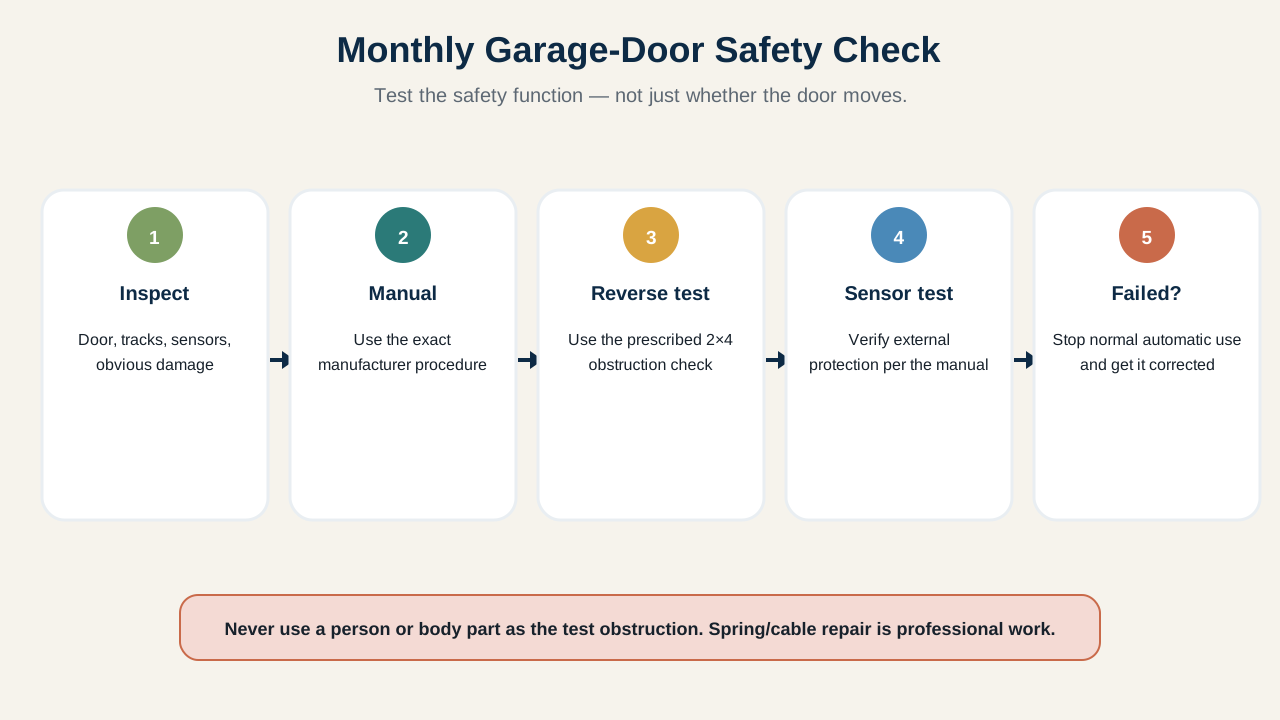
Observe the door → follow the opener manual → test the reverse function → verify the safety sensors → stop using automatic operation if the system fails.
Do not turn a failed safety test into spring, cable, track, or internal opener repair.
The short answer
CPSC safety guidance says the garage door opener’s reversing feature should be tested monthly.
For the contact-reversal check, CPSC describes placing a 2-by-4 on the garage floor in the door’s path. If the closing door contacts the block and does not properly reverse, the opener should not continue to be used as though the test passed. CPSC guidance says the unit should be adjusted according to the owner’s manual, repaired, or replaced as appropriate.
Modern systems may also use external entrapment protection such as photoelectric sensors. Test those exactly as the opener manufacturer instructs.
If you do not have the owner’s manual, get the correct manual from the manufacturer using the model number before experimenting with adjustments.
Keep people, pets, hands, and body parts out of the moving door’s path during testing.
Why the Reverse Test Matters
An automatic opener does more than provide convenience. It controls a large moving door.
CPSC’s federal garage-door-operator requirements grew out of entrapment hazards, particularly to children. The current CPSC product-safety page confirms that automatic residential garage door operators are subject to the mandatory federal standard in 16 CFR Part 1211.
The safety system is designed to reduce the chance that a closing door will continue pressing downward when an obstruction is present.
That means “the door closes” is not a sufficient test. A safer system should also respond correctly when closing is interrupted.
Start With the Owner’s Manual
Garage-door systems vary by manufacturer and age.
Before testing:
- identify the opener manufacturer and model;
- locate the owner’s manual;
- review the manufacturer’s safety-test procedure;
- check whether the system uses photoelectric sensors, another external entrapment device, or a different approved configuration;
- note any warning lights or diagnostic indicators described by the manufacturer.
CPSC repeatedly tells consumers to test according to the manufacturer’s recommendations or owner’s manual.
That manual should control the exact procedure for your unit. This article gives you the safety framework, not permission to override the product instructions.
First, Look at the Door and Opener From a Safe Position
Before running a test, do a visual check.
Look for obvious conditions such as:
- a door that sits crooked;
- damaged or loose-looking tracks;
- visibly frayed cables;
- broken hardware;
- a spring that appears damaged;
- loose brackets;
- an opener rail that appears damaged;
- safety sensors that are knocked out of position;
- objects stored in the door’s travel path.
Do not touch or manipulate a cable or spring to inspect it more closely.
Garage-door spring systems can contain substantial stored energy. CPSC-hosted safety-standard material tells consumers to have a qualified service person repair cables, spring assemblies, and other hardware.
If the door or hardware already looks damaged, skip the functional test and arrange qualified service.
Keep the Test Area Clear
Do not use a person, pet, hand, foot, toy, or soft object as the obstruction.
CPSC’s homeowner safety alert specifies a 2-by-4 placed on the garage floor in the path of the door for the contact-reversal test.
Before operating the opener:
- Move vehicles, bicycles, toys, and stored items away from the test area.
- Keep children and pets out of the garage-door path.
- Stand clear of the moving door.
- Keep the door fully in view while it is operating.
CPSC guidance also tells consumers to keep remote controls away from children and not to let anyone cross the path of a moving door.
Run the Contact-Reversal Test
Follow the manufacturer procedure first.
CPSC’s general homeowner safety alert uses this basic check:
- Open the garage door fully.
- Place a 2-by-4 on the floor in the closing door’s path.
- Operate the door from a safe position where you can see the full movement.
- Watch what happens when the bottom of the door contacts the block.
The door should properly reverse rather than continue closing against the obstruction.
If it does not reverse correctly, treat that as a failed safety check. Do not keep repeatedly cycling the door hoping the result changes.
Follow the owner’s manual for the manufacturer’s prescribed response, or have the opener inspected and serviced by a qualified professional.
Test the Photoelectric Safety System According to the Manual
Many automatic garage-door openers use photoelectric sensors near the bottom of the opening.
CPSC’s federal requirements for openers manufactured beginning in the early 1990s added external entrapment protection requirements, which can include an electric eye or another approved system.
A photoelectric system is intended to detect an obstruction without waiting for the closing door to physically contact it.
The exact test procedure, indicator-light behavior, alignment method, and troubleshooting sequence are product-specific. So use the manual.
A typical manufacturer test may ask you to interrupt the sensor beam during closing and verify the expected response, but do not substitute a generic internet procedure for the instructions for your opener.
If the system reports a sensor fault or the door fails the manufacturer’s entrapment-protection test, do not defeat, bypass, tape over, or permanently misalign the safety device to make the door close.
Correct the problem.
What if the Door Reverses Before Touching the Block?
A door that reverses unexpectedly can have more than one explanation.
The obstruction-detection system may be sensing excessive resistance, the door may be out of balance, the track or rollers may be binding, or the opener may need an adjustment described by the manufacturer.
Do not assume that increasing force is automatically the right correction.
CPSC guidance emphasizes proper door balance and qualified service for spring, cable, and hardware repairs.
If the manual’s routine homeowner troubleshooting does not resolve the issue, use a garage-door professional.
The goal is not simply to make the door close. It is to make the system operate safely.
What if the Door Does Not Reverse?
Treat a failed reversal test seriously.
CPSC’s safety alert says that if the door does not properly reverse when it strikes the 2-by-4, the garage-door opener should be disengaged until the unit is adjusted according to the owner’s manual, repaired, or replaced.
For a homeowner, the practical response is:
- stop relying on automatic operation;
- keep children and others away from the door;
- review the exact manufacturer instructions;
- arrange repair or replacement if the approved routine procedure does not restore correct safety operation;
- retest after correction.
Do not leave a known failed reversing system in normal service.
Older Openers Deserve Extra Attention
CPSC’s history of the garage-door standard matters when you inherit an older home.
Automatic residential garage-door openers manufactured or imported for sale after January 1, 1991 were required to have reversing systems under the federal standard, and additional external entrapment-protection requirements took effect for openers manufactured on or after January 1, 1993.
A very old opener may not provide the same protection as a modern compliant unit.
CPSC has long urged homeowners to replace non-reversing automatic openers rather than continue using them.
If you cannot determine the age, safety features, or compliance status of an old opener, document the model and have the system evaluated.
Do Not Confuse the Opener With the Door Hardware
The electric opener is only one part of the system.
The door itself has tracks, rollers, hinges, springs, cables, brackets, panels, balance, and alignment.
A reversing opener cannot make damaged door hardware safe. Likewise, an opener that repeatedly struggles with an improperly balanced door may not be the root problem.
CPSC-hosted safety-standard language specifically warns that an improperly balanced door increases risk and says qualified service personnel should make repairs to cables, spring assemblies, and other hardware.
That is a clear DIY boundary.
Testing is homeowner maintenance. Spring and cable repair is not part of this article.
Be Careful With the Emergency Release
Garage-door openers normally have a manual release mechanism.
That does not mean you should pull it casually when the door is open.
CPSC-hosted safety-standard instructions warn that emergency release should be used when the door is closed when possible, because weak or broken springs can increase the rate of door closure.
If you suspect a broken spring, damaged cable, or badly unbalanced door, do not stand under the open door or release the opener just to see what happens.
Use qualified service.
A Monthly Garage-Door Safety Table
| What you find | What it suggests | What to do next |
|---|---|---|
| Door reverses correctly on the prescribed obstruction test | Contact-reversal function responded as expected | Continue monthly testing |
| Door does not reverse | Entrapment protection test failed | Stop normal automatic use and follow manual/professional service guidance |
| Photoelectric system fails its manufacturer test | External entrapment protection may not be working | Correct the sensor/system fault before normal use |
| Sensor is blocked or misaligned | Door may not close normally, or protection may be impaired | Follow manufacturer alignment/troubleshooting instructions |
| Door is crooked, binds, or moves unevenly | Door hardware/balance problem is possible | Have the door system evaluated |
| Cable or spring appears damaged | Stored-energy hazard may exist | Do not manipulate it; use qualified service |
| Opener is very old and safety features are unclear | Modern protection may be absent | Identify model/age and consider professional evaluation or replacement |
| Door reverses unpredictably | Resistance, balance, sensor, or opener issue may exist | Use manual diagnostics; escalate if unresolved |
| Child can reach wall controls or remotes | Unsafe access to door operation | Keep controls and transmitters out of children’s reach |
Make the Test Repeatable
Record:
- opener manufacturer and model;
- manual location or digital copy;
- approximate opener age;
- date of each monthly check;
- result of the contact-reversal test;
- result of the manufacturer’s sensor test;
- any repair or adjustment performed;
- date of professional service.
If you buy a house and do not know the system history, the first successful test becomes your baseline.
When to Call a Garage-Door Professional
Use professional service when:
- the door fails the reversing test and routine manufacturer troubleshooting does not resolve it;
- springs or cables appear damaged;
- the door is visibly out of balance;
- the door binds or falls;
- the opener or rail is damaged;
- safety sensors cannot be restored using the manufacturer procedure;
- the opener is old enough that its protection is unclear;
- the door hardware needs adjustment beyond routine owner maintenance.
This follows the same decision framework used elsewhere on the site: if the consequence of being wrong is serious and you cannot verify the repair safely, the job belongs with a qualified professional. See our DIY or hire a professional guide for that decision, and how to hire a home improvement contractor once you’ve decided the repair isn’t yours to make.
Test the Safety Function, Not Just the Convenience Function
A garage door that opens when you press the remote has proved only that the opener can move the door.
The safety question is different:
Does the system respond correctly when closing should stop or reverse?
Use the manual, keep the area clear, run the monthly reversing test, verify the external safety system, and document the result.
If the system fails, stop treating it as normal.
The monthly test takes only a few minutes, but it answers the question that matters most: whether the opener is still behaving like a safety system rather than just a motor.
This check is one part of a broader home maintenance approach to the house, and it pairs naturally with the routine upkeep covered in the first-time homeowner maintenance checklist.
Sources and further reading
We prioritize primary and authoritative sources. The sources below support the factual and technical guidance used in this article.
- U.S. Consumer Product Safety Commission: Automatic Residential Garage Door Operators FAQ
- U.S. Consumer Product Safety Commission: Non-Reversing Garage Door Openers Are a Hazard
- U.S. Consumer Product Safety Commission: Automatic Garage Door Opener Safety
- U.S. Consumer Product Safety Commission: Safety Commission Publishes Final Rules For Automatic Garage Door Openers
- U.S. Consumer Product Safety Commission: UL 325 Standard for Safety, Door, Drapery, Gate, Louver, and Window Operators and Systems (CPSC-hosted reference material)
Practical Homeownership provides general educational guidance. Home conditions, local rules, manufacturer requirements, and the appropriate professional scope can vary.