How to Check Your Home's Water Pressure and Tell Pressure Problems From Low Flow

Pressure and flow aren't the same thing -- before assuming your house has a pressure problem, compare several fixtures (hot vs. cold, one faucet vs. whole house), and if you want an actual number, use an inexpensive household pressure gauge and compare it with what your water utility says is normal for your address, since ranges like Portland's 40-80 psi describe one local system, not a universal target.
A weak shower doesn’t automatically mean your house has low water pressure.
A clogged aerator, a partially closed valve, corrosion inside old piping, a failing pressure-reducing valve, or a neighborhood water-system issue can all produce symptoms that feel similar at the faucet. That’s why the first useful distinction is this: pressure and flow are not the same thing.
Portland Water Bureau explains that pressure is the force pushing water through the plumbing, while flow is the amount of water delivered over time. A home can have normal pressure and still have poor flow at one or more fixtures. For a homeowner, the practical sequence is: compare fixtures, measure pressure, separate local from whole-house symptoms, check simple causes, and escalate if the pattern remains unexplained.
The short answer
If you think your water pressure is wrong, check several fixtures, including both hot and cold water, and compare an indoor faucet with an outdoor hose bibb if one is available. If you want an actual pressure reading, use a household water-pressure gauge according to its instructions and your utility’s guidance, and don’t assume one national “perfect PSI” applies to every house. If pressure is unusually high, unusually low, or changes suddenly, check with your water utility and a licensed plumber as appropriate.
Portland Water Bureau says pressure varies across a city and even between nearby homes, and manages most homes in its system around 40-80 psi, but that range describes Portland’s system, not a universal national standard. The useful homeowner question is whether your reading matches what your utility expects for your address, and whether the home’s private plumbing is behaving normally.
Pressure and Flow: Why the Difference Matters
Imagine two houses with the same static pressure. In one, a clean, properly sized pipe delivers strong flow to the shower. In the other, an old galvanized pipe has become restricted by corrosion. The pressure at rest can still be reasonable, but the available flow falls when water is used.
Denver Water specifically notes that low flow in older homes is often mistaken for low pressure. Portland Water Bureau gives similar guidance: clogged faucet screens, old corroded piping, partly closed valves, whole-house filters, pressure-reducing valves, leaks, and water-system disruptions can all change what a homeowner experiences. A pressure gauge helps because it gives you a measurement instead of a sensation.
Start With a Fixture Comparison
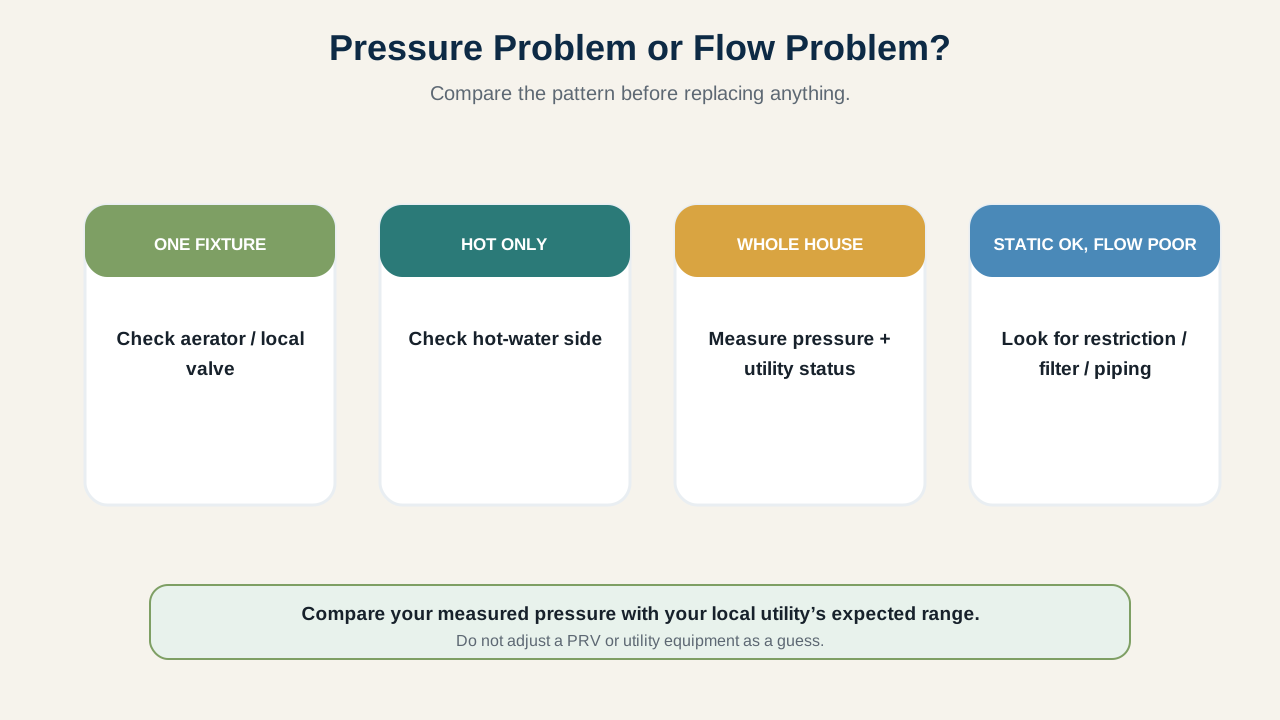
Before buying a gauge, use the plumbing you already have. Check several fixtures and ask: is the problem at one faucet or throughout the home? Is hot water weak while cold water is normal? Are upstairs and downstairs fixtures different? Is an outdoor hose bibb also weak? Did the change happen suddenly or gradually? Those differences help narrow the problem.
One fixture only. If one sink is weak but other fixtures are normal, the problem is more likely local. Portland recommends checking faucet screens or aerators and local valves when only some fixtures have reduced flow. A clogged aerator can make a perfectly normal plumbing system feel like it has low pressure.
Hot water only. If cold water is normal but hot water is weak, the issue may be on the hot-water side. Portland suggests checking the water heater for leaks or failures and checking hot-water faucet screens and showerheads. Don’t treat a hot-only problem as a city-pressure problem without evidence.
Whole house. If every fixture, including an outdoor hose bibb, shows reduced performance, the problem more likely involves the service line, a whole-house device, a leak, a pressure regulator, or broader piping restriction. That’s when a pressure measurement becomes more useful.
How a Household Pressure Gauge Helps
Portland Water Bureau specifically tells customers they can buy an inexpensive pressure gauge to check pressure in real time. Use it only at a connection it’s designed to fit, following the gauge manufacturer’s instructions and your utility’s guidance. The exact test point and procedure depend on the gauge and the plumbing arrangement. A conservative homeowner test avoids modifying plumbing or removing components simply to create a test point; if you don’t have a normal accessible threaded connection, ask a plumber or the utility how pressure should be measured at your home.
Static Pressure vs. Pressure While Water Is Flowing
A reading with no water running tells you the pressure under a quiet condition. The experience at the shower happens while water is moving, which is why one static number can’t explain every flow complaint. If the static reading looks reasonable but the shower becomes weak when several fixtures run, the issue may involve flow capacity, pipe restriction, a regulator, or another part of the private plumbing. Don’t start adjusting valves just because the gauge gave you one number. Use it with the symptom pattern.
Don’t Treat 40-80 PSI as a Universal Rule
Portland Water Bureau says it manages most homes in its system between 40 and 80 psi, and its local plumbing code requires a pressure-reducing device for certain private systems receiving more than 80 psi. That doesn’t mean every U.S. utility delivers the same range, or that every jurisdiction applies the same local rules. Water pressure depends on elevation, utility design, local regulation, and the home’s own plumbing.
Your local water provider may be able to tell you the expected static pressure range for your address. That’s more useful than comparing your gauge reading with a generic internet number.
What High Pressure Can Mean
If the house repeatedly shows pressure above what your utility or local plumbing requirements consider appropriate, a pressure-reducing valve may be involved. Portland Water Bureau advises customers with high-pressure concerns to contact the utility. If the utility side is within its expected range, the home may need a PRV installed or repaired.
A PRV is a plumbing component, not a dial for casual experimentation. Don’t adjust, rebuild, or replace one unless you understand the specific device and local plumbing requirements. If high pressure is confirmed, use a licensed plumber for diagnosis and correction.
What Low Pressure Can Mean
Low pressure or weak flow can come from several directions. Official utility guidance points to possibilities such as a local fixture restriction, partially closed valves, a whole-house filter problem, a pressure-reducing valve problem, old corroded piping, a leak, a neighborhood water-system event, or elevation and local system conditions.
The pattern matters more than the label. If one faucet is weak, start there. If the whole house changed suddenly, look for a broader cause and check whether the utility is reporting work or an outage. If the decline happened slowly over years in an older house, pipe restriction becomes more plausible.
Sudden Change vs. Gradual Change
This is one of the most useful distinctions a homeowner can make.
A sudden pressure or flow drop can coincide with a water-main break, utility work, a partially closed valve, a new leak, or a regulator or filter failure. Check whether neighbors are experiencing the same problem and contact the utility if the change seems broader than your property.
A slow decline is more consistent with something developing over time, such as mineral buildup, corrosion, a degrading valve, or a restricted filter. Denver Water notes that older galvanized service lines can lose flow as corrosion and mineral deposits reduce the effective pipe diameter.
A Water-Pressure Decision Table
| What you find | What it suggests | What to do next |
|---|---|---|
| One faucet is weak, others normal | Local fixture restriction is likely | Check aerator/screen and local valve |
| Hot is weak, cold is normal | Hot-water-side issue is possible | Check heater area and hot-side fixtures |
| Whole house is weak | Broader plumbing/service issue is possible | Measure pressure and check utility status |
| Static pressure looks normal but flow is poor | Pressure may not be the real problem | Look for restriction, valve, filter, or pipe issue |
| Pressure changed suddenly | Utility event, leak, or component problem is possible | Check utility notices and inspect for leaks |
| Pressure declined gradually in an older home | Pipe restriction becomes more plausible | Have plumbing evaluated |
| Reading is higher than local expected range | High-pressure condition may exist | Contact utility/plumber; evaluate PRV |
| Reading is lower than local expected range | Utility or private-plumbing cause is possible | Compare fixtures and contact utility/plumber as needed |
| Gauge reading changes dramatically while fixtures run | Flow capacity or restriction may be involved | Professional diagnosis may be useful |
Check for Leaks Before Blaming the Utility
A plumbing leak can reduce pressure or flow and waste water at the same time. If the house has a water meter, use the hidden-leak check from our hidden water leaks guide when appropriate. A meter that changes during a controlled no-use period is useful evidence that water is moving when it shouldn’t be. Don’t assume the pressure regulator is bad if the real problem is an active leak.
Whole-House Filters and Other Equipment
A whole-house filter can restrict flow when the media becomes clogged or the system isn’t operating correctly. A water softener, backflow device, pressure regulator, booster pump, or other equipment can also affect system behavior. The more equipment sits between the meter and the fixture, the more useful a plumbing diagram or professional diagnosis becomes. Don’t bypass treatment or safety devices as a troubleshooting shortcut unless the manufacturer and a qualified professional specifically direct that procedure.
What Not to Do
Avoid turning a simple measurement into a plumbing repair. Don’t adjust a PRV because a forum told you which screw to turn, force old shutoff valves, open utility-controlled meter equipment, remove backflow devices, install a booster pump without understanding local requirements, assume low flow means low city pressure, or assume one PSI target applies everywhere. Measure first, then interpret the result within the local system.
When to Call the Water Utility
The utility is useful when the whole house changed suddenly, neighbors report the same problem, you want the estimated pressure range for your address, pressure appears unusually high or low, or there may be a water-main or service event. Portland Water Bureau explicitly offers customers help with expected pressure ranges and pressure concerns, and your local provider may offer similar information.
When to Call a Plumber
Professional help makes sense when the utility says its side is normal but your home isn’t, a PRV or booster system may be failing, the plumbing is old or heavily corroded, a leak is suspected, pressure is unstable, or whole-house flow remains poor after simple fixture checks. See our DIY or hire a professional guide for how to make that call. The homeowner’s job isn’t to prove the exact failed component before calling; a good diagnostic pattern is enough.
Build Water Pressure Into Your Home Baseline
If you’re a first-time homeowner, record one normal pressure reading while the system is working well, along with where you took it, whether fixtures were running, the approximate date and time, the utility’s expected range if available, and whether the house has a PRV, whole-house filter, or booster system. That baseline gives you something real to compare with later, and it fits naturally alongside the routine checks in a first-time homeowner maintenance checklist, including knowing where your main water shutoff valve is before you ever need it in a hurry.
Measure the System, Not Just the Shower
This kind of measurement-first troubleshooting is one part of a broader homeowner tools approach: find the controls and baselines that matter, verify them while things are working normally, and know when a reading calls for a professional.
A weak shower can feel like a pressure problem before you know what the plumbing is doing. The useful sequence is: compare fixtures, measure pressure, distinguish pressure from flow, check simple causes, compare with local utility expectations, and escalate when needed. That keeps you from replacing the wrong component or chasing a universal PSI number that doesn’t belong to your system.
The gauge gives you a number. The pattern tells you what to do with it.
Sources and further reading
We prioritize primary and authoritative sources. The sources below support the factual and technical guidance used in this article.
Practical Homeownership provides general educational guidance. Home conditions, local rules, manufacturer requirements, and the appropriate professional scope can vary.