How to Test a GFCI Outlet: What the TEST and RESET Buttons Should Actually Do

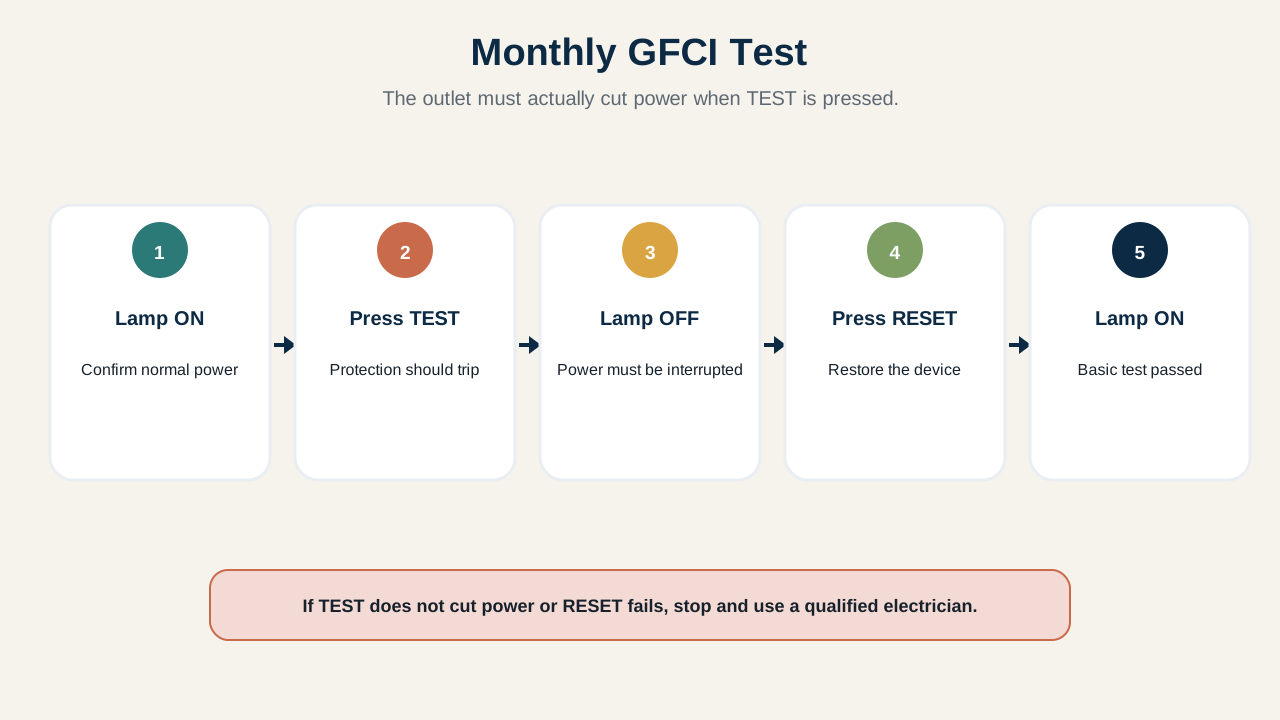
Plug a small lamp into the GFCI receptacle, turn it on, press TEST (the lamp should go out), then press RESET (the lamp should come back on) -- do this monthly, and if the lamp doesn't go out on TEST or doesn't come back on after RESET, stop relying on that outlet for protection and call a qualified electrician instead of opening the receptacle yourself.
A GFCI receptacle can keep supplying power to whatever’s plugged into it even after its shock-protection function has stopped working. That’s exactly why the U.S. Consumer Product Safety Commission tells homeowners to test GFCIs regularly instead of assuming that a powered outlet is a protected outlet.
For a receptacle-type GFCI, the homeowner test is simple and doesn’t require opening anything: power a small lamp, press TEST, confirm the power actually cuts off, press RESET, and confirm the power comes back. CPSC recommends doing this once a month, in addition to following the manufacturer’s own instructions.
If the outlet doesn’t behave the way it should, don’t open the box or try to rewire anything yourself. Treat that as an electrical repair and call a qualified electrician.
The short answer
To test a receptacle-type GFCI using CPSC’s procedure: plug in a night-light or small lamp and turn it on, then press the TEST button. The light should go out, showing that power to the protected receptacle has been interrupted. Press the RESET button, and the light should come back on.
CPSC says GFCIs should be tested monthly. If pressing TEST doesn’t interrupt power, or RESET doesn’t restore it the way it should, stop using that receptacle for anything that depends on GFCI protection, and have the device inspected or replaced by a qualified electrician.
What a GFCI Is Actually Protecting Against
GFCI stands for ground-fault circuit interrupter. CPSC describes it as a device that detects current leakage that may be flowing through a person and disconnects power quickly enough to reduce the risk of severe shock or electrocution: a different job from an ordinary circuit breaker, which is mainly there to protect the wiring itself from excessive current. A GFCI is watching for an imbalance between the current leaving the circuit and the current coming back.
That’s why GFCI protection matters most where electricity and moisture end up close together. CPSC safety guidance specifically calls out kitchens, bathrooms, garages, utility areas, and outdoor receptacles as locations where GFCI protection is commonly important, though the exact requirements for a particular home come down to local electrical code.
Why “The Outlet Works” Isn’t Enough
A receptacle can deliver power just fine and still fail to provide the protection you think it does. CPSC’s homeowner guidance is explicit that a GFCI receptacle may still have power even when it’s no longer providing shock protection, which is the whole reason for the monthly test.
Don’t reduce the check to “my charger works.” You’re testing the protective function itself, not just whether electricity is present at the outlet.
The CPSC Lamp Test
The most useful homeowner procedure is the one CPSC describes in its home-safety guidance, using a small lamp or night-light so the result is easy to see.
Step 1: Confirm normal power. Plug the lamp into the GFCI receptacle and switch it on. The light should be on before you press TEST. If the receptacle has no power to begin with, that’s a different troubleshooting problem. Don’t assume the GFCI itself is the cause.
Step 2: Press TEST. On a functioning unit, the protective mechanism should trip and cut power, and the lamp should go out. Depending on the device, the RESET button may pop outward or otherwise show that it tripped.
Step 3: Confirm the power is actually off. Don’t judge the result only by whether a button moved. CPSC has specifically noted that if the RESET button changes position but the connected lamp stays on, the receptacle may be improperly wired. What matters is that the protected outlet actually lost power.
Step 4: Press RESET. Follow the manufacturer’s instructions, and power should be restored with the lamp coming back on. If the device won’t reset, repeatedly cycling the buttons isn’t a substitute for an actual diagnosis.
How Often Should You Test It?
CPSC recommends testing GFCIs monthly, and has also advised testing after installation, after a power failure, and according to the manufacturer’s instructions. Monthly is an easy calendar interval for a homeowner routine. You can pair it with testing your smoke and CO alarms or another recurring home-safety check. The goal is consistency, not complexity.
Which GFCI Are You Actually Testing?
Not every protected outlet has TEST and RESET buttons on its face. One GFCI device can protect additional downstream receptacles on the same branch circuit, and CPSC also recognizes GFCI circuit breakers and portable GFCI devices as valid forms of protection. That means a perfectly ordinary-looking receptacle may still be protected by a GFCI located somewhere else entirely.
Don’t assume “no TEST button” automatically means “no GFCI protection.” If you’re mapping the home’s electrical safety devices, it’s worth recording which GFCI controls which downstream outlets when you can verify that relationship safely, without removing receptacles or opening the panel to figure it out.
What if Pressing TEST Does Nothing?
If the lamp stays on after you press TEST, the protection didn’t interrupt power the way it should have. CPSC says a GFCI that doesn’t test properly should be replaced or inspected by an electrician. Don’t keep using the receptacle as though the protective function were intact just because it still supplies power. The cause could be device failure or a wiring problem, but the homeowner test itself won’t tell you which. That diagnosis requires electrical work.
What if RESET Doesn’t Restore Power?
If the device trips but won’t reset, stop at that observation. A GFCI can refuse to reset for several reasons, including conditions elsewhere on the circuit or a problem with the device itself. Don’t try to defeat the device, hold the button in, open the receptacle, or swap in a standard outlet in its place. If a normal, manufacturer-approved reset doesn’t restore operation, bring in qualified electrical help.
Warm, Damaged, or Discolored Outlets Are a Different Problem
CPSC’s electrical safety checklist warns that unusually warm or hot outlets and switches can indicate unsafe wiring conditions. Other signs that move a situation out of routine GFCI testing and into electrician territory include scorch marks, melting or discoloration, crackling or buzzing, visible damage, a loose receptacle body, repeated tripping, any shock or tingling sensation, and exposed wiring.
Stop using a damaged or abnormally hot electrical device and have it inspected. The TEST button isn’t a diagnostic tool for damaged wiring.
Do Not Test While Standing in Water
A GFCI exists because shock risk is higher around moisture, which is not a reason to test one while standing in water or handling wet equipment. If the receptacle or the surrounding area is wet because of a leak, flooding, or a damaged enclosure, stay clear of it and get qualified help for the electrical hazard rather than testing it yourself.
GFCI Receptacle vs. GFCI Breaker
A receptacle-type GFCI has TEST and RESET controls right on the outlet. A GFCI breaker sits in the electrical panel and protects an entire branch circuit, and CPSC also recommends regular testing of GFCI breakers according to their own instructions.
The safety distinction that matters for a homeowner: pressing a clearly labeled test button as instructed is routine operation. Removing a panel cover, touching conductors, changing a breaker, or diagnosing internal panel wiring is not. Keep the panel closed beyond its normal breaker controls.
A Practical GFCI Decision Table
| What you find | What it means | What to do next |
|---|---|---|
| Lamp turns off when TEST is pressed | Protective function tripped as expected | Press RESET and confirm power returns |
| Lamp stays on after TEST | Protection did not interrupt power as expected | Stop relying on that GFCI and call an electrician |
| RESET restores the lamp | Basic functional test passed | Test again next month |
| RESET will not restore power | Device or circuit needs evaluation | Don’t open or rewire it; get qualified help |
| Outlet has power but no TEST/RESET buttons | It may be ordinary, or protected upstream | Identify the protection without opening wiring |
| Receptacle is hot, scorched, cracked, or buzzing | Possible electrical hazard | Stop use and have it inspected |
| GFCI trips repeatedly in normal use | A fault may exist in the device, appliance, or circuit | Don’t keep resetting indefinitely; investigate professionally |
| Water is present around the receptacle | Shock hazard may be elevated | Stay clear and get qualified help |
| GFCI breaker is in the panel | Protection is at the breaker level | Use only manufacturer-approved test controls; don’t remove the panel cover |
Map the GFCIs in a New Home
During your first month in a house, test and document accessible GFCI protection. Record bathrooms, kitchen counter areas, the garage, basement or utility areas, exterior receptacles, laundry or sink-adjacent areas, and any GFCI breakers in the panel that you can identify without removing covers. When a GFCI trips, check which downstream outlets also lose power. Labeling that relationship can save time later. Keep the mapping observational; don’t remove devices just to trace wiring.
Testing Does Not Replace Code Compliance
A GFCI can pass its button test every month and still exist in a home that doesn’t meet current electrical requirements. Codes change, older homes may have different configurations, and renovations can trigger updated requirements. This guide is about testing an existing protective device, not certifying an entire electrical installation. If you’re renovating, adding receptacles, replacing ungrounded wiring, or trying to figure out where GFCI protection is legally required, check current local electrical requirements and use a qualified electrician where needed: the same boundary our DIY or hire a professional guide walks through for electrical work generally.
Build It Into a Monthly Safety Routine
The GFCI test is useful precisely because the homeowner action is simple and the pass/fail result is easy to verify. Use the sequence: lamp on, press TEST, lamp off, press RESET, lamp on.
If that sequence fails at any point, stop the DIY path there. Don’t open the box to “see what’s wrong.” A protective device that doesn’t protect reliably is an electrical repair problem, not a button-testing problem, and it belongs on the same recurring calendar as the rest of your first-time homeowner maintenance checklist. This test is one part of a broader homeowner tools approach to the controls and safety devices that matter most in an emergency. Another simple homeowner-tools skill worth having is reading your electric meter to track home energy use, which works the same way: a few minutes of observation instead of guesswork.
Sources and further reading
We prioritize primary and authoritative sources. The sources below support the factual and technical guidance used in this article.
Practical Homeownership provides general educational guidance. Home conditions, local rules, manufacturer requirements, and the appropriate professional scope can vary.