Was Your Home Built Before 1978? What to Know About Lead Paint Before You Renovate

If your home was built before 1978 and your renovation will disturb painted surfaces, treat lead as a real possibility, determine whether lead-based paint is present (or presume it is) before work begins, and hire a Lead-Safe Certified contractor; paid renovation work is generally subject to EPA's RRP Rule, homeowner DIY in an owner-occupied home generally is not, but renting the property, running childcare there, or renovating it for profit changes that answer.
A wall can look perfectly ordinary and still change the safety plan for a renovation.
In 1978, the federal government banned consumer use of lead-based paint in residential settings. EPA says millions of older homes still contain it, and roughly three-quarters of U.S. homes built before 1978 still have some lead-based paint somewhere on them.
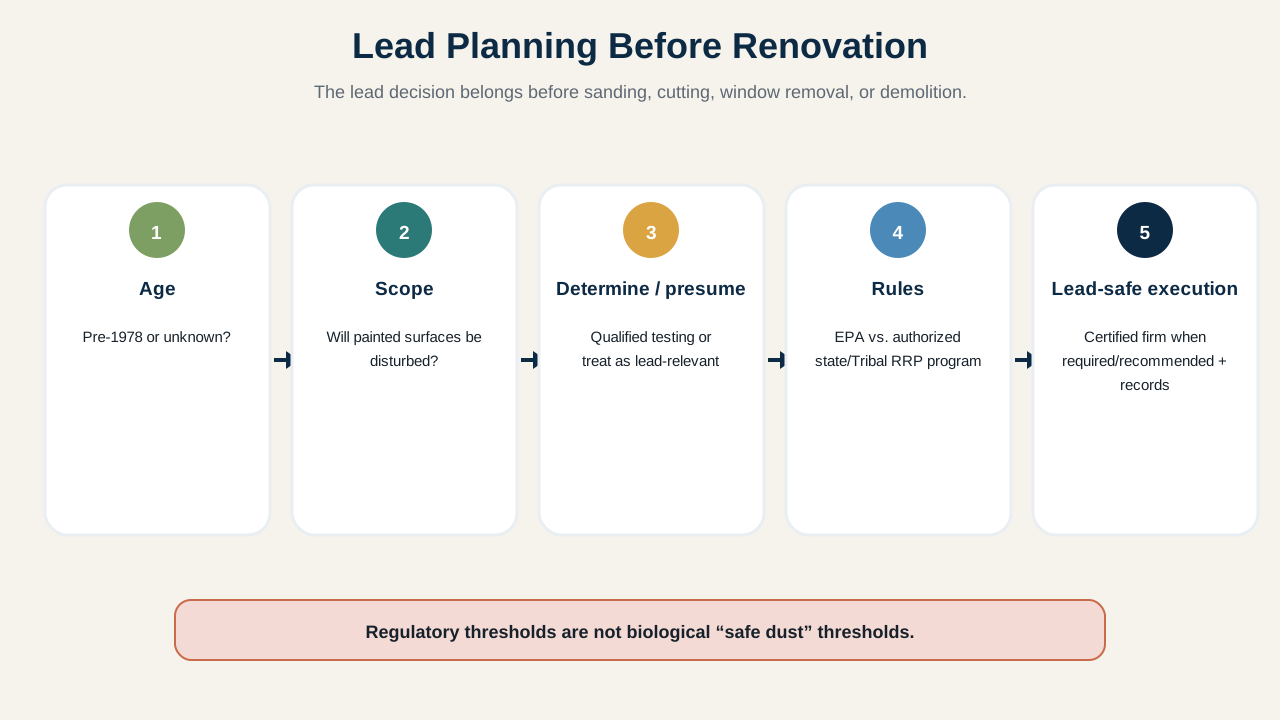
The problem usually shows up when renovation disturbs painted surfaces. Sanding, cutting, window replacement, demolition, drilling, or other work can create lead-contaminated dust and chips if lead-based paint is present. For a homeowner, the important decision comes before the dust starts: confirm the home’s age, identify the surfaces the project will disturb, determine whether lead is present or has to be presumed, understand which federal or state rules apply, and use a Lead-Safe Certified contractor when it’s required or recommended.
The short answer
If the home was built before 1978 and the project will disturb painted surfaces, treat lead as a real possibility. Don’t assume a newer-looking paint layer means the older lead paint underneath is gone.
EPA recommends hiring a certified lead inspector or risk assessor when you need to determine whether lead-based paint is present, and it recommends homeowners hire a Lead-Safe Certified contractor for renovation, repair, and painting work in pre-1978 homes. Paid contractors doing covered renovation work in pre-1978 housing are generally subject to EPA’s Renovation, Repair and Painting (RRP) Rule or an authorized state or Tribal program.
Homeowners doing work in their own owner-occupied pre-1978 home are generally not covered by the federal RRP Rule, but EPA still recommends lead-safe practices and hiring certified professionals. And the federal rule can apply differently if you rent all or part of the property, operate childcare in the home, or renovate homes for profit.
Don’t sand, grind, cut, or demolish a suspect painted surface just to see what’s under it. The renovation plan should account for lead before disturbance begins, not after.
Why 1978 Is the Key Screening Date
EPA uses pre-1978 housing as the central screening category because the federal government banned the sale of lead-based paint for consumer residential use that year. A pre-1978 build date doesn’t prove every painted surface contains lead. It means lead-based paint may be present, and the project needs the appropriate evaluation before disturbing paint. Generally speaking, the older the home, the more likely lead-based paint may be present.
If you don’t know the year, check property records, building or tax records, closing documents, prior inspection reports, permit history, and seller disclosures where applicable. EPA’s DIY renovation guidance says that if you can’t determine the age of the home, the safest approach is to assume the area being renovated may contain lead-based paint and use lead-safe practices anyway.
A Newer Paint Job Doesn’t Clear the Wall
Many older homes have been repainted several times, and a modern topcoat can cover older lead-containing layers underneath. That means a clean, intact painted surface may not create the same immediate exposure problem as deteriorating paint or renovation dust, but cutting or sanding through those layers can still disturb the older paint hiding beneath them.
EPA says children can live safely in older homes when paint and surfaces are in good condition and kept clean, but deteriorated paint and renovation work can create hazardous chips and dust. So the real question isn’t “does the paint look old?” It’s whether this particular project is going to disturb painted material in a home built before 1978.
Renovation Dust Is the Main Reason This Matters
EPA’s RRP consumer guidance identifies common renovation activities like sanding, cutting, and window replacement as activities that can create hazardous lead dust and chips when lead-based paint is present. Dust spreads easily: it can move well beyond the immediate work area onto floors, furniture, clothing, tools, HVAC surfaces, and other places where family members may encounter it later.
Children are especially vulnerable to lead exposure, and EPA also highlights risks to pregnant people and adults. That’s the whole reason lead planning belongs before demolition starts, not in the cleanup phase after dust has already spread through the house.
Inspection, Risk Assessment, and Renovation Are Different Things
Several lead-related services sound similar but actually answer different questions. A lead-based paint inspection identifies whether lead-based paint is present on surfaces. A risk assessment evaluates lead hazards and exposure risks in the property as a whole. A renovation changes or repairs the building and may disturb paint along the way. A lead abatement project is specifically designed to permanently eliminate lead-based paint hazards, and it operates under a different regulatory program from ordinary RRP work. EPA explicitly distinguishes abatement from renovation, repair, and painting.
Don’t hire someone for “lead work” without knowing which service you actually need. For a planned renovation, you may first need reliable information about whether the affected surfaces contain lead, and then a renovation firm qualified to do the actual work.
EPA Recommends Certified Lead Professionals for Testing
EPA’s current DIY guidance recommends hiring a certified lead inspector or lead risk assessor to test a pre-1978 home and determine whether the surfaces being renovated contain lead-based paint. Certified renovators may also make certain lead-free determinations for RRP purposes using EPA-recognized test kits or paint-chip sampling within the rule’s framework.
Don’t assume a consumer hardware-store test automatically satisfies every regulatory purpose. If the result affects whether a contractor is exempt from RRP requirements, the testing and documentation have to meet the applicable rule, not just answer your own curiosity.
The RRP Rule: What Paid Contractors Need to Know
EPA’s Renovation, Repair and Painting Rule applies to firms and individuals paid to perform renovation, repair, and painting work that disturbs paint in pre-1978 housing and child-occupied facilities, subject to the rule’s definitions and exemptions. EPA states that covered firms must be certified and must use trained, certified renovators along with lead-safe work practices.
Federal RRP requirements generally apply when a paid contractor disturbs more than 6 square feet of painted surface per room on the interior, or more than 20 square feet on the exterior, with certain activities, such as window replacement, specifically covered regardless of how homeowners might otherwise think about the area involved. EPA or an authorized state or Tribal program administers the rules depending on location; some states and Tribes run their own EPA-authorized RRP programs, so the exact administering agency isn’t always EPA itself.
Homeowners Doing Their Own Work Are a Different Case
This is where lead guidance often gets oversimplified. EPA says the federal RRP Rule generally does not apply to homeowners doing renovation work in their own owner-occupied pre-1978 home. That doesn’t mean lead dust becomes safe. EPA still recommends that homeowners hire Lead-Safe Certified contractors, and it provides DIY lead-safe work guidance for homeowners who choose to proceed themselves anyway.
The regulatory situation changes if the home is used differently. EPA says RRP requirements can apply if you rent all or part of the home, operate a childcare facility in the home, buy, renovate, and sell homes for profit, or perform renovation work for compensation. That last category matters a lot for house flipping: EPA explicitly states that individuals or businesses buying, renovating, and selling pre-1978 homes for profit are performing renovation for compensation, and are subject to RRP requirements when they perform the work themselves.
House Flippers Need to Treat This as a Business Compliance Issue
If you buy a pre-1978 property to renovate and resell, don’t assume the “homeowner DIY” exception applies just because you technically own the house. EPA’s guidance is explicit here: house flippers who perform their own renovation work on covered pre-1978 properties are renovating for compensation and must comply with RRP certification and work-practice requirements. If the outside renovation work is performed entirely by another firm instead, that firm has to satisfy the applicable RRP requirements on its own.
This matters operationally, because lead planning can affect contractor selection, project schedule, containment, cleanup, documentation, cost, and demolition sequence. Lead should be part of the acquisition and renovation due diligence on older properties from the start, not something you deal with after the fact.
Window Replacement Is a High-Relevance Example
Window replacement is one of the renovation activities EPA repeatedly calls out in its RRP guidance. Older painted windows can create dust through removal, friction surfaces, trim disturbance, and surrounding painted components. EPA also makes clear that simply believing the window is newer doesn’t automatically remove the project from RRP requirements in a pre-1978 housing unit. The affected components have to be determined free of regulated lead-based paint through methods the rule actually recognizes before an exemption can be claimed.
If your renovation includes windows, build lead planning in before removal begins, not partway through.
Don’t Use Renovation as the Lead Test
A common bad sequence looks like this: start sanding, notice several paint layers, wonder whether one of them contains lead, and only then think about testing, after the dust already exists. Reverse that order. If the home’s age and the project’s scope make lead relevant, work out the lead plan before disturbance, not after.
Don’t scrape, drill, sand, cut, grind, or demolish suspect paint just to collect an informal sample, unless the testing method and safety procedure actually match what you’re trying to establish. EPA recommends certified professionals whenever you need a reliable lead-based paint determination.
What to Ask a Contractor
Before hiring someone for renovation in a pre-1978 home, ask whether their firm is Lead-Safe Certified, which certified renovator will direct the covered work, whether the state is governed directly by EPA or by an EPA-authorized state or Tribal program, how the work area will be contained, how dust will be controlled, how cleanup and verification will be handled, what records you’ll receive, and whether the specific surfaces have been tested or will simply be treated as lead-containing.
EPA provides an online search tool for Lead-Safe Certified firms and recommends homeowners use certified contractors for pre-1978 RRP projects. Don’t rely on a contractor telling you, “we’ve done old houses for years.” Certification and lead-safe procedures are specific requirements, not a substitute for experience claims.
The “6 Square Feet” Rule Is Not a DIY Safety Threshold
The federal RRP rule contains a de minimis area exemption for certain small paid renovation activities: generally 6 square feet or less of painted surface per room inside, and 20 square feet or less outside, subject to important exceptions. Don’t read that as “lead dust is safe below 6 square feet.” EPA’s consumer guidance warns that even small amounts of lead dust can be hazardous, especially to children. Regulatory thresholds determine when particular rule requirements apply; they aren’t biological safety guarantees.
State and Local Rules Can Be Different or More Protective
EPA administers the RRP program in most jurisdictions, but several states and Tribes operate their own EPA-authorized programs, which can have their own forms, enforcement systems, and potentially more protective requirements. Other state or local laws may also address lead disclosure, testing, rental housing, abatement, waste, or contractor licensing.
So the correct workflow runs: start with the federal EPA baseline, then identify any authorized state or Tribal program, then check for additional state or local requirements on top of that. Don’t treat one national article (including this one) as the final legal compliance source for a specific jobsite.
A Lead-Before-Renovation Decision Table
| What you find | What it means | What to do next |
|---|---|---|
| Home built in 1978 or later | Federal pre-1978 screening category may not apply | Still verify other hazards/rules relevant to project |
| Home built before 1978 | Lead-based paint may be present | Build lead evaluation into project planning |
| Build year unknown | Lead risk cannot be screened out by age | EPA says safest approach is to assume affected area may contain lead |
| Paint is intact but project will sand/cut/remove it | Renovation can create lead dust if lead is present | Determine lead status or use lead-safe approach before work |
| Hired contractor will disturb paint | RRP may apply | Verify Lead-Safe Certified firm and applicable program |
| Owner-occupant doing own project | Federal RRP generally may not apply to homeowner | Hazard still exists; EPA recommends lead-safe practices/pro help |
| Property is rented or used for childcare | RRP applicability changes | Verify federal/state program requirements before work |
| Property is being flipped for profit | EPA treats self-performed renovation as compensated work | RRP certification/compliance may be required |
| Window replacement planned | Covered/high-relevance disturbance category | Include lead planning before removal |
| Contractor says old paint is “probably fine” | Not a lead determination | Use qualified testing or treat as lead-containing as appropriate |
Lead Paint and Permits Are Separate Questions
A project can comply with the building permit process and still have unresolved lead-safety obligations. Likewise, a Lead-Safe Certified contractor may still need ordinary building or trade permits. Our guide on checking whether your repair needs a permit covers permit verification on its own.
For a pre-1978 renovation, both questions belong in preconstruction planning: what permits and inspections does the local authority require, and what lead-safety program and work-practice requirements apply? Don’t let one process substitute for the other. They run in parallel, not in sequence.
When to Use a Lead Inspector or Risk Assessor
Professional lead evaluation becomes especially valuable when the renovation is large, several rooms are affected, children or pregnant people live in the home, paint is deteriorated, windows, doors, trim, or friction surfaces are involved, you need a documented determination for regulatory or planning purposes, you’re buying an older property specifically for renovation, or previous lead records are incomplete or contradictory.
EPA distinguishes certified inspectors and risk assessors from renovation firms because the services answer genuinely different questions. Use the professional who actually matches the decision you need to make.
Build Lead Due Diligence Into the Project File
For a pre-1978 home, it’s worth saving proof of the construction year, prior lead inspection or risk-assessment reports, lead test results tied to specific components, contractor Lead-Safe certification information, Renovate Right documentation where applicable, permits, the project scope, cleanup and verification documentation required by the applicable program, and final invoices and records.
Don’t rely on memory about which wall or window was tested. A lead-free determination for one component doesn’t automatically apply to every painted surface in the house.
Plan Before You Make Dust
Lead paint is manageable when a project recognizes it early. The expensive and dangerous sequence is discovering it after demolition has already spread dust through the house. Use this sequence instead: age, then scope, then lead determination or presumption, then the applicable RRP program, then a qualified contractor or lead-safe plan, then controlled renovation, then documented cleanup.
A pre-1978 home isn’t automatically unsafe to live in. EPA says intact, well-maintained painted surfaces can be managed safely. Renovation changes that equation, because it can turn hidden lead in old paint into airborne dust. The most important lead-safe tool, in the end, isn’t a respirator, a plastic sheet, or a vacuum. It’s making the lead decision before the first painted surface gets disturbed, and getting that decision right often means hiring a home improvement contractor who’s actually certified for the work, comparing contractor estimates with lead compliance built into the scope, or working through our broader DIY or hire a professional guide before deciding to do any of it yourself.
Sources and further reading
We prioritize primary and authoritative sources. The sources below support the factual and technical guidance used in this article.
- U.S. Environmental Protection Agency: Renovation, Repair and Painting Program: Consumers
- U.S. Environmental Protection Agency: Lead Renovation, Repair and Painting Program
- U.S. Environmental Protection Agency: Lead-Safe Renovations for DIYers
- U.S. Environmental Protection Agency: Steps to Lead Safe Renovation, Repair and Painting
- U.S. Environmental Protection Agency: Who Is Covered by the RRP Rule?
- U.S. Environmental Protection Agency: I have a for-profit business where I purchase residential properties and renovate them -- am I covered by the RRP Rule?
- U.S. Environmental Protection Agency: I am planning to renovate my home. How can I find a Lead-Safe Certified firm?
Practical Homeownership provides general educational guidance. Home conditions, local rules, manufacturer requirements, and the appropriate professional scope can vary.