What to Do After a Minor Indoor Water Leak: The First 24-48 Hours

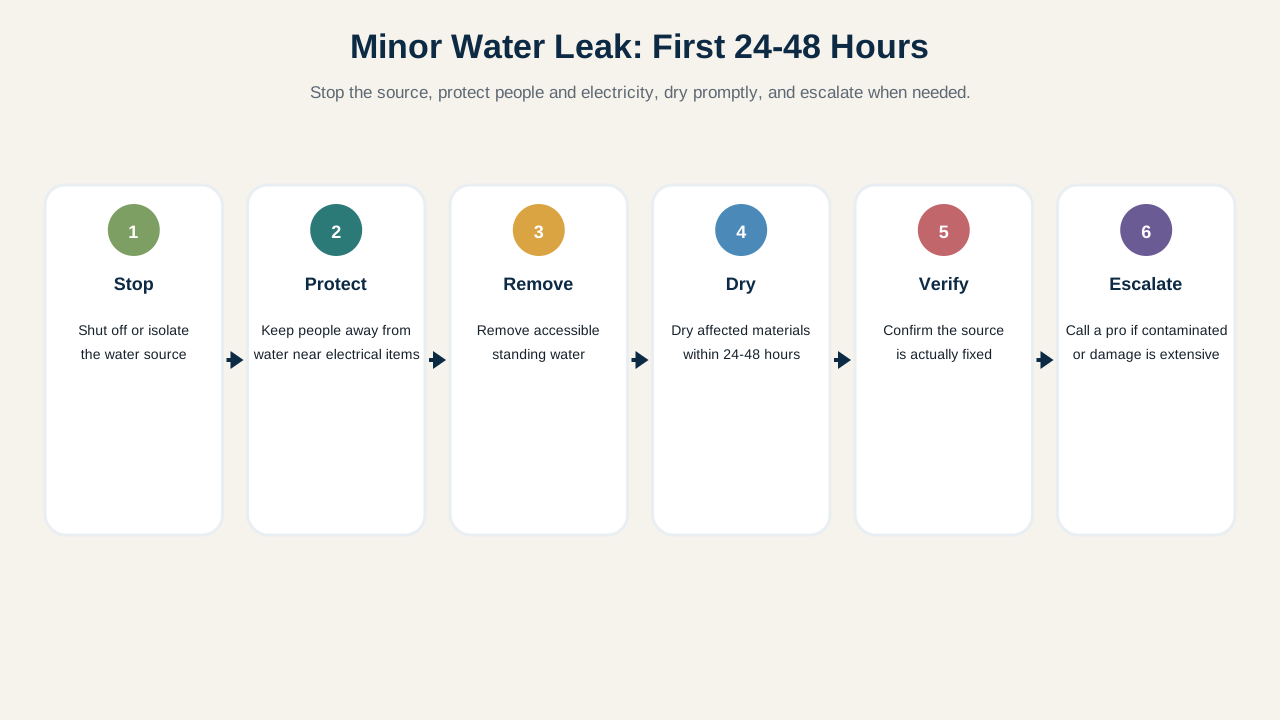
For a minor, clean-water leak, stop or isolate the source if it is safe to do so, keep people away from any water near electrical equipment, remove accessible standing water, and dry the affected materials within about 24-48 hours; treat the water as contaminated, or the damage as extensive, and call a professional whenever you are not confident the source is fixed or the area can be dried safely.
A small indoor leak can turn into a much larger problem if the water source is not stopped and the affected materials stay wet.
EPA guidance is clear on the core principle: moisture control is the key to mold control, and wet or damp materials should be dried within about 24-48 hours when possible. EPA also warns that if the water is not clean, the damage is extensive, or conditions are unsafe, professional help is the better path.
For a homeowner, the useful framework is: stop the source if safe, protect people and electricity, remove standing water only when safe, dry materials promptly, document the area, verify that the source is fixed, and escalate when contamination, hidden moisture, or damage exceeds routine cleanup.
The short answer
For a small, clean-water leak:
- Stop or isolate the water source if you can do so safely.
- Keep people away from any area where water has reached electrical equipment or wiring.
- Move dry belongings away from the wet area.
- Remove accessible standing water using safe household methods.
- Increase drying with ventilation, fans, air conditioning, or dehumidification when appropriate.
- Dry wet materials as quickly as practical. EPA repeatedly uses a 24-48 hour window as an important mold-prevention target.
- Photograph the area and note what became wet.
- Recheck the area after drying instead of assuming that a dry surface means the assembly is dry.
- If water is contaminated, damage is extensive, mold is already substantial, or the source is hidden, use qualified help.
This article is for minor, clean-water incidents. It is not a flood-remediation guide.
First, Identify the Kind of Water Event
Not every wet floor should be treated the same way.
A small supply-line drip, a clean sink overflow, or water from a known clean source is different from sewage, a drain backup, floodwater, water that has passed through contaminated materials, water from an unknown source, or water that has been standing for a long time.
EPA’s mold guidance says that if the water is not clean or the damage is extensive, homeowners should consult a professional. If you are unsure whether the water is clean, do not assume it is. That uncertainty changes the cleanup decision.
Stop the Source Before You Focus on Drying
Drying the room while water is still entering is not a solution. Use the home’s control points. Depending on the problem, that may mean shutting off the fixture, closing an appliance supply valve, using the main water shutoff, stopping use of a leaking fixture, or calling the utility or a professional if the source is outside your safe control.
Do not force a corroded or stuck valve, and do not open plumbing systems simply to trace a leak. If the source cannot be isolated safely, call a plumber or appropriate service provider.
Water and Electricity Change the Risk
Do not walk into standing water if energized electrical equipment may be involved. Water near outlets, extension cords, appliances, electrical panels, exposed wiring, damaged lighting, or powered equipment can create an electrical hazard.
Do not reach through water to unplug equipment. If electrical isolation is needed and you cannot reach the proper control from a dry, safe location, stay out of the area and use qualified help. The goal is not to save a rug by creating an electrical emergency.
Move Dry Belongings Out of the Wet Zone
Once the source is controlled and the area is safe, protect items that are not yet wet. Move cardboard boxes, books, furniture, electronics, textiles, stored documents, and other absorbent household items away from the damp area.
This creates space for airflow and prevents a small wet zone from spreading into a larger loss. Do not drag wet, contaminated, or moldy material through clean areas without a reasoned cleanup plan.
Remove Standing Water When the Situation Is Small and Safe
For a minor clean-water leak, standing water can often be removed with towels, mops, a wet-rated extraction device used according to its instructions, or other ordinary methods appropriate for the surface.
Do not use an ordinary household vacuum to collect water unless the equipment is specifically designed for wet pickup. If the volume is too large for routine household cleanup, stop treating the incident as minor. A useful threshold is not a precise number of gallons. It is whether you can control the water, remove it, and dry the affected materials safely with ordinary means.
Drying Within 24-48 Hours Matters
EPA repeatedly advises drying water-damaged areas and items within approximately 24-48 hours to reduce the chance of mold growth. That does not mean mold appears at exactly hour 49. The point is urgency.
Do not leave damp drywall, carpet, wood, insulation, or furnishings wet for days while waiting to see what happens. Drying options may include air movement, air conditioning, dehumidification, opening accessible cabinets or doors to improve airflow, and removing wet items from the affected area. Use equipment safely, and do not place fans where cords or motors will be exposed to water.
Surface-Dry Is Not Always Dry
A wall or floor can feel dry on the surface while moisture remains under flooring, behind baseboard, inside wall cavities, under cabinets, inside carpet padding, in insulation, or beneath a finished surface.
This is where the source and extent of the leak matter. A brief spill on a nonabsorbent floor is different from water that entered a wall or soaked a carpet assembly. If water clearly traveled into a concealed assembly, professional moisture assessment may be appropriate even if the exposed surface dries quickly. Our guide to checking your home for hidden water leaks walks through the broader pattern of finding water that is not obvious from a quick look.
Porous and Nonporous Materials Behave Differently
Hard, nonporous surfaces are generally easier to clean and dry than absorbent materials. EPA notes that moldy absorbent materials may need replacement because complete cleaning can be difficult. Examples of more absorbent materials include ceiling tile, carpet, carpet pad, paper-faced drywall, insulation, upholstered materials, and cardboard.
Do not assume every wet porous material must be discarded immediately. The decision depends on water cleanliness, how wet it became, how long it stayed wet, whether mold developed, whether the material can be completely dried, and whether it can be cleaned safely. When the answer is uncertain, get professional guidance instead of enclosing a damp material.
Do Not Paint or Seal Over Wet Materials
EPA warns against enclosing, sealing, or painting materials that are wet or show signs of biological growth. A stain is not fixed because you covered it. If the surface is still damp, sealing it can hide the evidence while the moisture problem continues.
The order should be stop source, then dry, then verify, then repair finish, not cover the stain and hope the problem is gone.
Watch the Pattern During Drying
Document how the area changes. Ask whether the wet boundary is getting smaller, whether the material is actually drying, whether moisture reappears after plumbing use, whether there is a musty odor, whether the area becomes wet again after rain, whether staining is growing, and whether the source is truly fixed.
A recurring wet spot means the diagnosis is incomplete. Do not keep drying the symptom while leaving the source active. If the moisture shows up away from any obvious leak (around a window, on an exterior wall, or overnight without a clear source), it can be worth ruling out condensation rather than an active leak before assuming the plumbing is still the problem.
A Minor-Leak Decision Table
| What you find | What it suggests | What to do next |
|---|---|---|
| Small clean-water spill on hard surface | Low-complexity event | Remove water and dry promptly |
| Wet carpet from a brief clean-water leak | Padding/subfloor may also be wet | Dry aggressively; assess layers |
| Water reached an outlet or powered equipment | Electrical hazard may exist | Stay clear and isolate through safe controls/professional help |
| Sewage or drain-backup water | Contaminated-water event | Stop routine DIY cleanup; use qualified remediation |
| Water entered wall/ceiling cavity | Hidden moisture possible | Consider professional moisture assessment |
| Area stays damp beyond the initial drying effort | Drying is incomplete or source remains | Investigate source and concealed moisture |
| Musty odor develops | Mold may be growing somewhere | Investigate moisture and affected materials |
| Mold area is extensive | Cleanup exceeds minor homeowner scope | Use professional remediation guidance |
| Water source is unknown | Diagnosis incomplete | Find source before closing/repairing surfaces |
| Materials are dry and source is fixed | Incident may be resolved | Document and monitor |
When Mold Is Already Present
The moment visible mold becomes a substantial part of the problem, the job changes from simple water cleanup to mold cleanup. EPA’s homeowner guidance emphasizes fixing the moisture source, drying the area, cleaning appropriate hard surfaces, considering replacement of moldy porous materials, and using professional help when damage is extensive or water is not clean.
Do not use color alone to decide that mold is “toxic” or harmless. The practical question is whether moisture remains and whether the affected material can be cleaned and dried safely. Keeping indoor humidity in a healthy range year-round is one of the best ways to keep a minor drying job from turning into a recurring mold problem.
If the Leak Came From Above
Water on a ceiling or wall may have originated somewhere else. Possible sources include plumbing, roof leakage, bathroom overflow, HVAC condensate, an appliance connection, or an upper-floor fixture.
Do not open a ceiling blindly when electrical wiring or a large trapped volume of water may be present. If the ceiling is bulging, sagging, or heavily saturated, stay clear and get qualified help. A cosmetic ceiling stain is not the same as a structurally compromised wet ceiling.
Insurance Documentation
For a meaningful loss, document before discarding or repairing more than necessary. Useful records include photos, video, date and time discovered, suspected source, what was shut off, affected rooms and materials, invoices, and professional findings.
Insurance coverage and claim requirements vary by policy. Do not delay necessary safety action simply to wait for an adjuster, but if the loss may become a claim, good documentation helps reconstruct what happened.
When to Call a Professional
Escalate when the water is sewage, floodwater, or otherwise contaminated; the damage is extensive; electrical hazards are present; ceilings or structural materials are heavily saturated; the source is hidden or cannot be stopped; water entered large concealed areas; materials remain wet despite ordinary drying; mold growth is substantial; the leak recurs; or you cannot verify that the assembly is dry.
This follows the site’s core rule: if the consequence of being wrong is high and you cannot verify the result safely, hire the appropriate professional. Our DIY or hire a professional guide walks through that decision in more detail for water damage and other home repairs.
The First 48 Hours Are About Control
The purpose of a fast response is not panic. It is control. Stop the water, protect people, dry the area, verify the source, and watch for hidden moisture.
EPA’s 24-48 hour guidance is useful because it gives homeowners a practical target: do not let a small water event sit. A minor leak is easiest to manage while it is still minor.
Sources and further reading
We prioritize primary and authoritative sources. The sources below support the factual and technical guidance used in this article.
- U.S. Environmental Protection Agency: A Brief Guide to Mold, Moisture and Your Home
- U.S. Environmental Protection Agency: What are ten things I need to know about mold?
- U.S. Environmental Protection Agency: The Key to Mold Control is Moisture Control - Infographic
- U.S. Environmental Protection Agency: Biological Contaminants and Indoor Air Quality
Practical Homeownership provides general educational guidance. Home conditions, local rules, manufacturer requirements, and the appropriate professional scope can vary.