What Humidity Should Your House Be? How to Measure It and Know When Moisture Is Too High

EPA recommends keeping indoor relative humidity below 60 percent, ideally between 30 and 50 percent, and using a moisture or humidity gauge to check it -- if readings repeatedly climb above that range, look for the moisture source (showers, cooking, humidifiers, leaks, poor exhaust) rather than just running a dehumidifier and hoping the number improves.
Indoor humidity is easy to ignore until the house starts showing you the result.
A bathroom stays damp long after a shower. A bedroom window collects water in the morning. A closet smells musty. A basement feels clammy even though there’s no visible leak. Those signs can point toward excess moisture, but they don’t tell you the actual indoor relative humidity. A small humidity meter can.
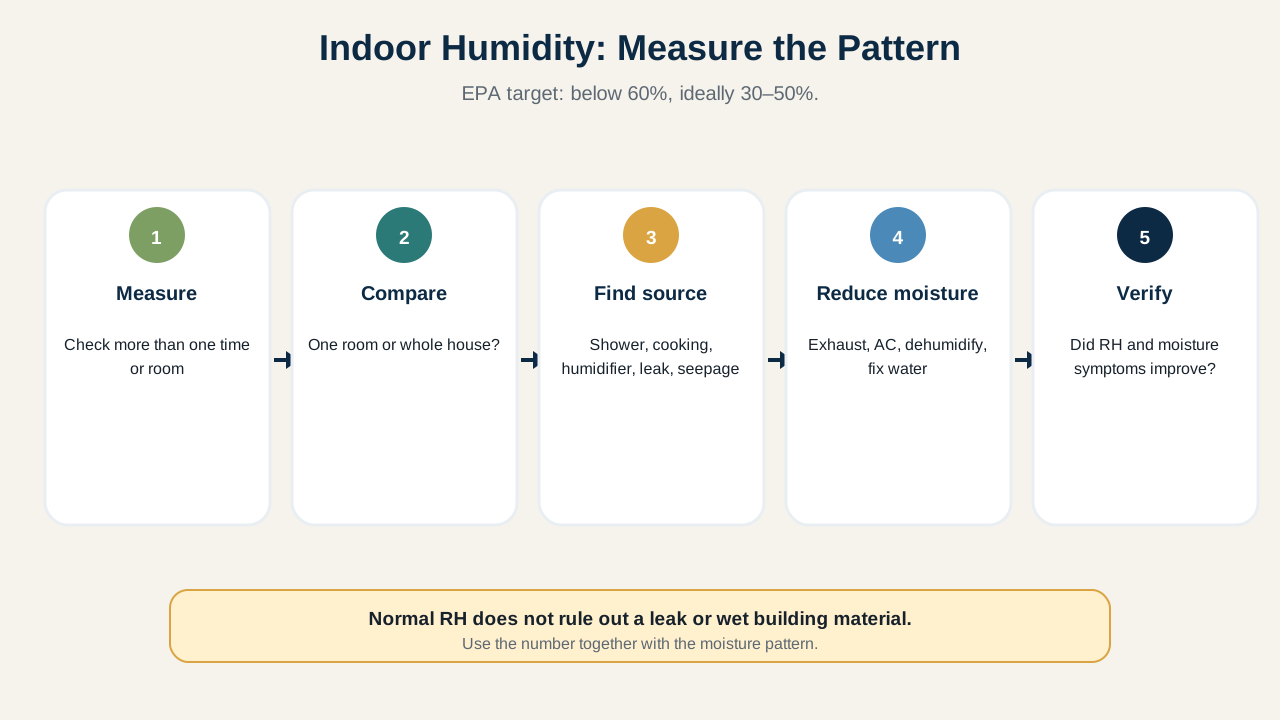
EPA recommends keeping indoor relative humidity below 60 percent and ideally between 30 and 50 percent, and its indoor-air guidance tells homeowners to use a moisture or humidity gauge to check whether the home is staying in that range. That gives you a simple routine to work from: measure, look for a pattern, identify the moisture source, reduce it, then verify the result.
The short answer
For most homes, EPA’s practical target is 30-50% relative humidity, with indoor humidity kept below 60% when possible. If your readings repeatedly rise above that range, check whether the problem is limited to one room or affects the whole house, look for moisture sources such as showers, cooking, humidifiers, wet materials, leaks, or poor exhaust, use bathroom and kitchen exhaust fans that vent outdoors, and use air conditioning or dehumidification when it makes sense. Don’t treat recurring condensation as normal just because it’s familiar.
A single reading is useful, but a pattern is better: humidity changes with outdoor weather, indoor activity, temperature, HVAC operation, and time of day. The goal isn’t to hold the number perfectly steady every minute. It’s to notice when the house stays too humid long enough to create condensation, dampness, or mold risk.
Relative Humidity Isn’t “How Much Water Is in the Air”
Relative humidity changes with temperature, which is why the same amount of water vapor can read differently as the air warms or cools. You don’t need to calculate psychrometrics to use the number correctly, though. Two practical consequences matter: a cooler surface can reach the point where moisture condenses even if the room doesn’t feel wet, and the same room can show different relative humidity at different temperatures.
This connects directly to the condensation-versus-leak problem. Water on a cold window may be condensation caused by humid indoor air meeting a cold surface. Water appearing after rain, or at a plumbing connection, may point somewhere else entirely. A humidity reading is evidence, not a complete moisture diagnosis.
EPA’s Target: Below 60%, Ideally 30-50%
EPA’s mold and indoor-air guidance is consistent on the basic target: keep indoor relative humidity below 60 percent, ideally between 30 and 50 percent. Excess moisture supports the conditions where mold and other biological contaminants grow, and EPA notes that condensation on windows, walls, or pipes can be a sign of high humidity. Its guidance recommends acting quickly to dry the surface and reduce the moisture source.
The important word is source. A dehumidifier can lower the number, but it won’t repair a plumbing leak, stop rainwater intrusion, or fix an exhaust fan that dumps moisture into an attic.
Start With a Humidity Meter
EPA specifically recommends a moisture or humidity gauge for checking indoor conditions: these are commonly sold as hygrometers or indoor humidity monitors. For a homeowner, the tool does three useful jobs: it tells you the current relative humidity, shows whether one room is consistently different from another, and helps you verify whether a change actually improved the moisture condition.
Follow the device’s placement instructions. If you want to understand the whole room, avoid drawing conclusions from a meter sitting directly beside a humidifier, supply vent, open window, or wet shower, unless that’s specifically what you’re trying to measure.
One Reading Isn’t the Whole Story
Suppose your bedroom reads 57% one afternoon. That doesn’t automatically mean the house has a moisture problem. Now suppose it reads 65-70% most mornings, the windows repeatedly collect condensation, and the closet has a musty odor. That pattern is more meaningful.
When you start tracking humidity, note the room, time, indoor temperature, recent moisture-generating activity, HVAC operation, and any visible condensation. You don’t need hundreds of readings. A few observations over several days can show whether the problem is momentary, activity-driven, weather-driven, or persistent.
One Room vs. the Whole House
This distinction can save time.
If the bathroom spikes after showers but the rest of the home stays normal, start with the bathroom. EPA recommends using exhaust fans or opening a window during moisture-generating activities like showering and cooking. A kitchen may show the same pattern during cooking, and a basement may behave differently because it’s cooler, below grade, or affected by ground moisture.
If several rooms stay humid, the cause may be broader: humid outdoor air entering the home, HVAC operation that isn’t controlling moisture well, heavy humidifier use, ongoing moisture entry, inadequate ventilation of moisture-generating activities, or wet building materials. Don’t assume the dehumidifier is the only answer; look for why the moisture load is high in the first place.
Condensation Is a Warning Sign
EPA repeatedly uses condensation as a clue in its moisture guidance: if you see water collecting on windows, walls, or pipes, dry the surface and reduce the moisture source.
Location and timing matter. Condensation on cold windows during certain weather may be mostly a humidity-and-surface-temperature problem. A stain that grows after rain, water under a pipe, or a meter that changes when the house should be using no water suggests a different investigation. Don’t solve every wet surface with a dehumidifier.
Common Indoor Moisture Sources
EPA identifies several ordinary household activities and systems that add moisture, including showers, cooking, humidifiers, wet cleaning, leaks, outdoor moisture entry, and damp foundations or basements. Dryers should vent outdoors where possible, and bathroom and kitchen exhaust should move moisture out of the space rather than simply recirculating it. A humidifier shouldn’t run just because the air “feels dry” if the meter already shows high humidity. Measure first.
What to Do When Humidity Is High
Start with the least complicated explanation that fits the pattern.
Run bathroom exhaust during showers and kitchen exhaust during cooking, when those systems vent appropriately. Turn down or stop a humidifier if indoor humidity is already high, and avoid adding large amounts of indoor moisture when the house is already struggling to dry. EPA notes that air conditioning can help reduce humidity during warm weather, and a dehumidifier can be useful in damp basements or other spaces where humidity stays high. Set it according to the manufacturer instructions and the target you’re trying to maintain.
If the source is a leak, seepage, or recurring water intrusion, fix the water problem rather than relying on the dehumidifier to manage the symptom.
What About Low Humidity?
EPA’s ideal range starts around 30%. If you use a humidifier because the house feels too dry, measure the result rather than guessing. A humidifier can create its own moisture problem if it pushes the house too high. EPA recommends cleaning stand-alone humidifiers frequently and keeping them from producing excessive indoor humidity.
A Practical Humidity Decision Table
| What you find | What it suggests | What to do next |
|---|---|---|
| 30-50% RH with no moisture symptoms | Indoor humidity is within EPA’s ideal range | Keep monitoring seasonally |
| Brief spike after shower or cooking | Activity-generated moisture | Use exhaust and verify humidity falls afterward |
| Repeated readings above 60% | Persistent excess humidity | Identify source and reduce moisture load |
| Window condensation with high RH | Indoor humidity may be contributing | Dry surface and reduce humidity/source |
| One room is much more humid than others | Local moisture source or ventilation issue | Investigate that room first |
| Whole house stays humid | Broader moisture/HVAC/outdoor-air issue is possible | Review sources and consider professional assessment |
| Dehumidifier lowers RH but dampness returns rapidly | Underlying moisture source may still be active | Investigate leak, seepage, or entry |
| Humidity is normal but a wall or ceiling stays wet | Relative humidity may not be the source | Investigate leak or exterior intrusion |
Don’t Chase the Number While Ignoring the House
A humidity meter is easy to watch, and that can make homeowners over-focus on the percentage and under-focus on what’s physically happening. If the meter says 45% but drywall is wet after rain, the building still has a water problem. If it says 65% after a long shower and returns to 45% once exhaust runs, that’s a different, unremarkable pattern. Use the number together with the building evidence.
Humidity, Mold, and Wet Materials
EPA’s central mold-prevention message is simple: control moisture. It recommends drying wet or damp materials quickly, ideally within 24-48 hours after leaks or spills. Humidity control helps prevent the conditions that support mold, but drying a wet wall or carpet can require more than lowering the room’s RH. If materials are already saturated, contaminated, or showing extensive mold growth, the problem has moved past routine homeowner humidity management. Don’t seal, paint over, or hide a wet material just because the room’s humidity reading has returned to normal.
When to Escalate
Professional help becomes more useful when humidity remains high despite reasonable source control, several rooms are affected and the source is unclear, HVAC appears unable to control moisture, moisture is entering from the foundation or building envelope, or significant wet materials are involved. The job changes when you move from measuring indoor air to diagnosing building systems. Our DIY or hire a professional guide walks through that decision in more detail.
Build Humidity Into Your Home Baseline
A first-time homeowner can learn a lot from a few seasonal readings. Record humidity in the main living area, the primary bedroom, a basement or lower level if you have one, a bathroom after normal use, and any room with recurring condensation or musty odor, in different weather conditions if you can. The goal is simply to understand what’s normal for your home, which fits naturally into a broader first-time homeowner maintenance checklist.
An indoor-air routine like this also pairs well with other checks that share the same “measure, don’t guess” logic: keeping your HVAC filter on schedule and, where relevant, testing your home for radon both start from the same idea: know your baseline before something changes.
Measure First, Then Manage the Moisture
This measure-first approach is one part of a broader indoor air and safety routine: know what’s actually in your home’s air before you decide how to change it.
Humidity is one of the simplest home conditions to measure and one of the easiest to misinterpret. Use the EPA target as a starting point (below 60%, ideally 30-50%), then use the house to tell you what the number means: measure, compare rooms and times, identify the source, reduce moisture, verify.
The number isn’t the repair. It’s the evidence that helps you choose the repair. If a specific leak, not just general humidity, is the source of the moisture, what to do in the first 24-48 hours after a minor water leak walks through stopping the source and drying the area safely.
Sources and further reading
We prioritize primary and authoritative sources. The sources below support the factual and technical guidance used in this article.
Practical Homeownership provides general educational guidance. Home conditions, local rules, manufacturer requirements, and the appropriate professional scope can vary.