How Often Should You Change Your HVAC Filter? A Homeowner's Decision Guide

Check your HVAC filter monthly, replace it every 60 to 90 days per manufacturer guidance, and swap it sooner if it looks dirty or conditions like heavy use or wildfire smoke make it load faster.
Changing an HVAC filter sounds like one of the simplest jobs in a house, until you actually search for a schedule. Thirty days, sixty days, ninety days, six months, “whenever it looks dirty”: all of those answers can be correct for a particular filter or home, and none of them is a reliable universal rule.
A better approach is to use the manufacturer’s replacement guidance as your baseline, check the filter regularly, and adjust based on what the filter and the system are actually doing. That gives you a schedule that fits your house instead of a generic calendar.
The short answer
ENERGY STAR recommends checking your HVAC filter every month, especially during periods of heavy heating or cooling use, and changing it if it looks dirty after a month. At a minimum, ENERGY STAR says filters should be changed every three months. EPA guidance adds an important qualification: manufacturers commonly recommend replacement every 60 to 90 days, but many factors affect how quickly a filter becomes dirty.
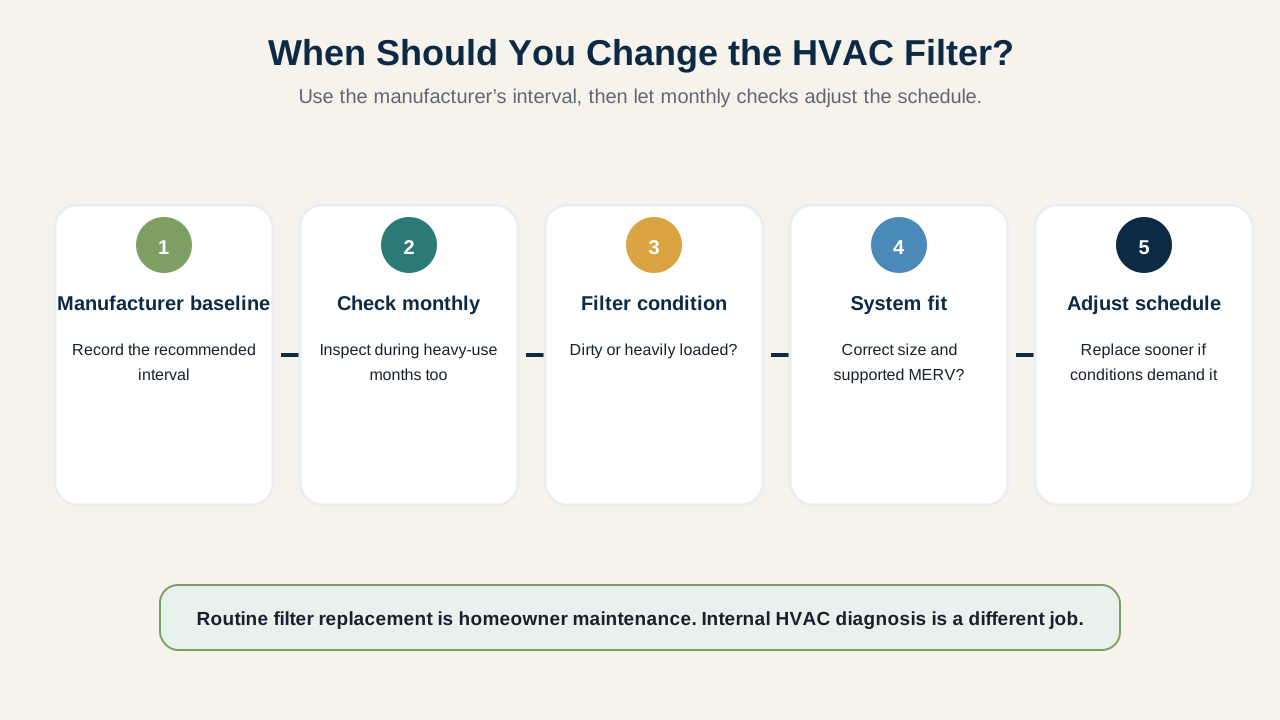
So the practical rule is to check monthly, follow the filter and equipment manufacturer’s instructions, and replace the filter when it’s dirty or when the recommended interval arrives, whichever comes first. If you’re considering a higher-efficiency filter, make sure your HVAC system can actually accommodate it rather than assuming a higher rating is automatically better for your equipment.
Why “Every 90 Days” Isn’t the Whole Answer
A calendar is useful because it keeps maintenance from disappearing from your attention, but the filter doesn’t know what day it is. How quickly it loads depends on how much air moves through the system and what that air carries with it. A filter may stay relatively clean in one home and load much faster in another. The HVAC system may also run far more during the hottest or coldest parts of the year than during mild weather.
That’s part of why ENERGY STAR recommends checking monthly even though its minimum replacement guidance is every three months: the monthly check catches the homes and seasons where waiting for a fixed 90-day date would be too long.
What the HVAC Filter Is Actually Doing
A central furnace or HVAC filter is primarily there to remove particles from air moving through the system. EPA notes that filtration can help improve indoor air quality, but as a supplement to two more fundamental strategies: controlling or removing pollution sources, and ventilating with clean outdoor air when appropriate.
A filter can reduce airborne particles, but it doesn’t solve every indoor-air problem. It doesn’t eliminate all pollutants, and it isn’t a substitute for controlling moisture, combustion hazards, smoke sources, or other problems at their source. The filter also protects the HVAC system itself from excessive dust and dirt buildup: when it becomes dirty and overloaded, EPA says it won’t work well, and ENERGY STAR warns that a dirty filter restricts airflow and makes the heating or cooling system work harder.
So filter maintenance has two jobs: keeping airflow from being unnecessarily restricted, and keeping filtration functioning as intended.
Start With the Filter You Already Have
Before buying a box of replacements, inspect the filter currently installed. You want to know four things: where it is, what size it is, what efficiency rating it uses, and what replacement interval the manufacturer specifies.
The filter may be located in a return-air grille, inside or next to the air handler or furnace, or somewhere else designed by the system manufacturer. Don’t assume every home has the same arrangement. If you can’t identify the correct filter location from normal accessible areas, check the equipment manual or ask an HVAC professional rather than opening equipment you don’t understand.
Confirm the size
HVAC filters come in many dimensions and thicknesses. EPA recommends making sure the filter fits snugly so air doesn’t leak around it; you shouldn’t have to crush or bend a filter to make it fit. The dimensions printed on the existing filter are a useful starting point, but compare them with the equipment or filter-rack requirements when possible. A filter that’s technically “close enough” in size isn’t the same as one that fits the system correctly.
How Often Should You Check It?
Monthly is a good inspection rhythm, though that doesn’t mean replacing it every month. It means looking. ENERGY STAR specifically recommends checking the filter every month, particularly during heavy-use months in winter and summer, and replacing it if it looks dirty after a month.
That gives you a simple homeowner habit: put a recurring monthly reminder on your calendar, check the filter, and replace it only when needed or when the manufacturer’s interval says it’s due. After several checks, you’ll start learning your house. Maybe your filter consistently reaches replacement condition around 60 days during cooling season but lasts longer during mild weather. That history is more useful than blindly copying someone else’s schedule.
What Does “Dirty Enough to Change” Mean?
You don’t need laboratory testing to recognize an obviously loaded filter. Compare the used filter with a clean replacement of the same type; if the filter media is heavily coated with dust and debris compared with the new one, that’s useful evidence that replacement is due. EPA’s guidance is straightforward here: a dirty and overloaded filter won’t work well.
Don’t wait for the filter to become completely packed with debris just because the calendar hasn’t reached the nominal replacement date. At the same time, don’t turn a slightly discolored filter into an emergency. The goal is regular replacement before excessive loading interferes with normal performance.
What Can Make a Filter Need Attention Sooner?
There’s no single household multiplier that lets you calculate an exact replacement date, but anything that substantially increases particle loading or system runtime can change how quickly the filter gets dirty. Examples include unusually heavy heating or cooling use, dusty conditions, renovation or construction dust, periods of outdoor smoke, unusual indoor particle generation, a filter that’s smaller or thinner than another system’s filter, or changes in how often the HVAC fan operates.
EPA has specifically noted during wildfire-smoke events that homeowners may need to change HVAC filters more often when filters load more quickly. The broader lesson: when conditions change, inspect the filter instead of assuming the old schedule still applies.
What About MERV Ratings?
MERV stands for Minimum Efficiency Reporting Value: it’s one way of describing how efficiently an HVAC filter captures particles across specified size ranges. A higher MERV rating generally means greater particle-removal efficiency, but there’s an important system constraint. EPA recommends using a filter rated at least MERV 13, or as high a rating as your system fan and filter slot can accommodate, and that second half matters just as much as the first. Don’t buy the highest-MERV filter on the shelf and force it into a system that wasn’t designed for it.
EPA notes that most residential systems can accommodate MERV 13 when filters are replaced frequently, but also recommends consulting an HVAC technician when you’re unsure what efficiency your system can properly handle. Your equipment manual and the physical filter rack matter here too.
Higher filtration is not a reason to ignore replacement
A higher-efficiency filter still gets dirty. EPA explicitly notes that all filters need regular replacement, and if a filter becomes overloaded, its performance suffers regardless of the number printed on the package.
A Practical Filter Decision Table
| What you find | What it means | What to do next |
|---|---|---|
| Filter is clean and still within the manufacturer’s interval | No obvious reason to replace yet | Reinstall correctly and check again next month |
| Filter is visibly heavily loaded before the expected date | Your real replacement interval may be shorter under current conditions | Replace it and shorten the next inspection interval |
| Filter is overdue by the manufacturer’s schedule | Maintenance is due even if you have not been checking it | Replace it and start a recurring reminder |
| New filter does not fit snugly | Wrong size or wrong filter for the rack is possible | Verify the required size before running it |
| You want to upgrade to MERV 13 or higher | Better particle filtration may be possible | Confirm the system can accommodate the filter |
| Filter gets unusually dirty very quickly | Conditions or system operation may have changed | Replace it and investigate what changed |
| You cannot locate or safely access the filter | System configuration is unclear | Check the manual or ask an HVAC professional |
| Airflow or comfort problems continue after a fresh correct filter | The filter may not be the real problem | Have the system evaluated rather than continuing to swap filters |
The filter is one maintenance point in a larger system. Don’t make it responsible for every comfort or indoor-air problem in the house.
How to Replace a Filter Without Guessing
This is a low-risk homeowner task when the filter is designed to be routinely accessible. Use the equipment and filter manufacturer’s instructions as the controlling procedure. A basic replacement should include confirming you have the correct size and type, accessing only the normal filter location, noting the airflow-direction marking on the old filter and the equipment, installing the new filter in the orientation the manufacturer specifies, making sure it sits correctly in the rack or grille, and restoring any normal access cover.
Don’t modify the filter rack, force an oversized filter into place, or open electrical or refrigerant-containing equipment just to reach something you think may be the filter. If routine access requires dismantling equipment beyond the manufacturer’s normal maintenance procedure, stop and verify what you’re doing.
Do You Need the Most Expensive Filter?
Not necessarily. Price, brand, and filter thickness alone don’t tell you whether a filter is appropriate for your system. The two questions that matter more are whether it provides the filtration level you want, and whether your system can operate correctly with it.
EPA doesn’t certify or recommend particular brands or models of residential HVAC filters, which is useful guidance for a homeowner because it keeps the decision focused on compatibility and performance rather than marketing language. If your goal is improved particle filtration, EPA’s consumer guidance favors MERV 13 or the highest efficiency the system can accommodate, and if you don’t know what your system can accommodate, that’s a technical question worth resolving before upgrading.
A Dirty Filter Is Not the Explanation for Every HVAC Problem
Replacing a loaded filter is good maintenance, but it shouldn’t become a universal troubleshooting ritual. If the system still has problems after a correctly sized, clean filter is installed, the issue may be somewhere else: weak airflow that doesn’t improve, rooms that remain unusually uncomfortable, repeated system shutdowns, ice or water where it shouldn’t be, unusual noises or odors, a filter that becomes abnormally dirty again very quickly, or visible equipment damage. If it’s one specific room rather than the whole house that keeps running hot or cold even with a fresh filter, why one room runs hotter or colder than the rest walks through the airflow, return-path, and envelope checks that come next.
You don’t need to diagnose the internal cause yourself. This is where the same DIY decision framework used elsewhere on the site applies: what happens if you’re wrong, and can you verify the result? Routine filter replacement is homeowner maintenance. Opening electrical compartments, refrigerant circuits, blower assemblies, or other internal HVAC components is a different category of work.
Build the Filter Into Your Home Maintenance Baseline
If you’re a new homeowner, don’t wait until the thermostat stops keeping up to learn what filter your house uses. During your initial home baseline: find the HVAC filter location, photograph the installed filter and its label, record the size, record the current MERV rating if shown, find the manufacturer’s replacement guidance, keep one spare correct filter in a known location, create a monthly inspection reminder, and record the date each replacement actually happens.
After a year, you’ll know much more about the real maintenance rhythm of your system. That’s the advantage of treating home maintenance as observation rather than memorization.
When to Bring In an HVAC Professional
Replacing a routine accessible filter doesn’t normally require a service call. But professional help makes sense when you can’t determine the correct filter or installation location, the system appears to require dismantling for routine filter access, you’re unsure whether the system can accommodate a higher-efficiency filter, the filter rack is damaged or allows obvious bypass around the filter, airflow problems persist with a clean, correct filter, there’s water, icing, electrical damage, burning odor, or another abnormal condition around the equipment, or you find yourself being pulled from maintenance into diagnosis or repair.
The point isn’t to make HVAC maintenance intimidating. It’s to keep a simple maintenance job from quietly turning into system work you can’t verify.
The Best Schedule Is the One Your House Proves It Needs
You don’t need a perfect universal number, because there isn’t one. Use three layers instead: manufacturer guidance gives you the baseline, a monthly visual check tells you whether the filter is loading faster than expected, and your replacement history tells you what’s normal for your home.
ENERGY STAR’s “check monthly, replace when dirty, and at least every three months” approach is a strong starting point. EPA’s 60-to-90-day manufacturer guidance shows why that range is common, while still emphasizing that real conditions matter. Once you start tracking the filter instead of guessing, the maintenance decision gets easier, and that’s exactly what a good homeowner routine should do: make the next decision simpler than the last one.
This filter routine is one part of a larger energy and comfort approach to home maintenance: check on a schedule, replace before performance suffers, and call a professional when a problem moves past routine maintenance. Comfort problems aren’t always about the filter, either. A persistent draft is worth running through our guide on finding air leaks around windows and doors before assuming the HVAC system is at fault, and if the air feels heavy or damp rather than drafty, what your indoor humidity should be is the more useful next check. If problems keep showing up across several rooms and the filter isn’t the answer, when to get a home energy audit walks through when it’s worth bringing in a professional to diagnose the whole house.
Sources and further reading
We prioritize primary and authoritative sources. The sources below support the factual and technical guidance used in this article.
- ENERGY STAR: Maintenance Checklist
- U.S. Environmental Protection Agency: Guide to Air Cleaners in the Home
- U.S. Environmental Protection Agency: What is a MERV rating?
- U.S. Environmental Protection Agency: Does EPA certify/register or provide lists of acceptable air cleaners or manufacturers/sellers?
- U.S. Environmental Protection Agency: Reduce Your Smoke Exposure
Practical Homeownership provides general educational guidance. Home conditions, local rules, manufacturer requirements, and the appropriate professional scope can vary.