How to Check Drainage Around Your Foundation After Heavy Rain

After heavy rain, walk the property from safe ground and look for water pooling beside the foundation, downspouts discharging against the wall, soil sloping toward the house, and damp basement or crawlspace areas. EPA recommends sloping the ground away from the foundation and keeping gutters clean, while FEMA recommends directing downspout water away from the structure and never routing it onto a neighboring property.
Water near a foundation is not automatically a foundation failure.
But repeated pooling, downspouts dumping at the wall, soil sloping toward the house, or recurring dampness in a basement or crawlspace are all signs worth taking seriously. EPA’s moisture guidance is direct: keep the foundation from staying wet, maintain drainage, and make sure the ground slopes away from the building so water doesn’t enter or collect around it. FEMA gives similar practical direction in its property-protection guidance: keep gutters and downspouts working, route roof runoff away from the foundation, and make sure drainage changes don’t send water onto a neighboring property.
For a homeowner, the best inspection happens when the drainage system is actually being tested by weather: watch the water after heavy rain.
The short answer
After a meaningful rain, walk the property from safe ground and look for water pooling beside the foundation, soil or hardscape that slopes toward the house, downspouts discharging against the wall, overflowing gutters, erosion channels, splashback staining, damp basement or crawlspace areas that appear after rain, and runoff from driveways, patios, or neighboring areas being directed toward the house.
A good drainage pattern moves roof and surface water away from the foundation toward a safe outlet, without creating erosion or sending the problem onto a neighboring property. Don’t start digging drains, changing grades, or waterproofing walls until you understand where the water is coming from and where it can safely go.
Why Surface Drainage Comes First
Basement and foundation moisture can have several causes: roof runoff, surface runoff, groundwater, plumbing leaks, condensation, poor below-grade drainage, or cracks and penetrations in the building envelope. Surface drainage is one of the easiest parts for a homeowner to observe: if the yard visibly sends rainwater toward the wall, or a downspout empties into a low spot beside the house, that’s useful evidence before anyone starts talking about interior waterproofing systems.
EPA specifically recommends making sure the ground slopes away from the foundation so water doesn’t enter or collect around it.
Inspect During Rain, Then Again Afterward
A dry-day inspection can show grading and obvious defects. A rain-day inspection shows behavior. You don’t need to stand outside in dangerous weather. Wait until lightning, high winds, flooding, or other hazards have passed, then observe where roof water leaves the downspouts, whether gutters overflow, where puddles form, how water moves across patios and walkways, whether low spots hold water beside the house, whether runoff cuts channels through soil or mulch, and whether water disappears toward a foundation opening, window well, crawlspace vent, or basement stairwell.
Take photos. A picture taken during or just after the rain is often more useful than trying to remember the pattern weeks later.
Start With the Gutters and Downspouts
Roof runoff is concentrated water: a large roof can move a substantial amount of rain toward only a few downspouts. If the gutter is clogged, damaged, sagging, or overflowing, that water may spill directly beside the wall. If the downspout ends at the foundation, the gutter can be working perfectly while the drainage system still sends water to the wrong place.
EPA recommends cleaning and repairing roof gutters regularly, and FEMA’s property-protection guidance recommends clearing gutters and directing downspout water away from the foundation. Look for leaves or debris blocking the gutter or outlet, water spilling over the gutter edge, disconnected downspout sections, crushed or blocked extensions, discharge into a low spot, erosion at the outlet, and staining where runoff repeatedly splashes the wall.
Don’t climb onto a roof or use an unsafe ladder setup just to complete the inspection. If the gutter can’t be safely accessed from the ground, hire someone equipped for the work.
The Ground Should Not Send Water Toward the House
EPA’s building moisture guidance says the surrounding slope should divert water away from the building. Its technical moisture-control guidance uses a design reference of about 5 percent slope, or 6 inches of fall over 10 feet, while also noting that a more stringent local building code may apply. That number is useful as a reference, not a command to reshape every property the same way.
Real lots have sidewalks, patios, driveways, neighboring properties, retaining walls, utility lines, drainage easements, landscaping, and local stormwater rules. The homeowner question is first whether the surface near the foundation is clearly moving water away, or clearly trapping or directing it toward the house. Major regrading is a design project, not simply a matter of adding random soil next to the wall.
Watch for Low Spots Beside the Foundation
Soil can settle after construction or landscaping, and a shallow depression beside the house may become a small basin during rain. That water can remain against the foundation long after the rest of the yard drains. Look especially under downspouts, beside steps, below hose bibbs, near window wells, behind landscaping beds, where utility trenches may have settled, and along additions or transitions between old and new construction.
A low spot is important because it explains where water is being held. It doesn’t automatically tell you the correct repair.
Hard Surfaces Can Create Their Own Drainage Pattern
Concrete, asphalt, pavers, and other hard surfaces don’t absorb rain the way soil does. A patio or driveway pitched toward the house can deliver water to the foundation even when the lawn slopes correctly. During rain, watch the surface itself: does water flow away, does it collect at the wall, does a driveway send runoff toward the garage or foundation, does a walkway create a channel that didn’t exist before?
Correcting hard-surface drainage may require more than a cosmetic sealant. If the surface elevation or pitch is wrong, a contractor may need to evaluate the drainage design.
Do Not Create a Problem for the Neighbor
Moving water away from your foundation doesn’t mean sending it onto the property next door. FEMA’s property-protection guidance is explicit about this: talk to adjacent property owners before you make drainage changes, since actions on your property can affect theirs. Local stormwater, drainage, easement, and grading rules can also control where runoff may discharge.
Before adding a long downspout extension, swale, drain, or grading change, identify the safe outlet. The end point matters as much as the direction away from the wall.
Downspout Extensions: Simple Idea, Site-Specific Result
A downspout extension can be an effective, low-complexity way to move roof runoff away from the foundation, but the extension still needs a safe discharge point. Don’t route water uphill where it flows back, onto a walkway where it creates a slip or ice hazard, across a property line without understanding local rules, into a location that erodes soil, into a foundation opening or window well, or directly toward another structure. The repair is successful only if the water reaches somewhere better.
Erosion Tells You Where Water Has Energy
Runoff that moves quickly can carry soil with it. Look for narrow channels cut into mulch or dirt, exposed roots, soil washed away below a downspout, sediment deposited at the bottom of a slope, and splash marks on siding or foundation walls. These are useful clues about the path water takes during rain.
Don’t simply fill an erosion channel if the same concentrated water will wash the repair away during the next storm. Fix the flow path instead.
Connect Outdoor Drainage With Indoor Evidence
If a basement, crawlspace, or lower wall becomes damp after rain, compare the timing with what you see outside: a wet basement corner directly below an overflowing downspout, a damp wall next to a low spot that holds water, water at a window well while runoff drains toward that side of the house, or seepage that appears only after prolonged rain. That pattern makes exterior water management more relevant.
But don’t assume every damp basement is a grading problem. Plumbing leaks, groundwater, foundation drainage, condensation, and other causes remain possible. The same pattern-first thinking that applies to checking your home for hidden water leaks still applies here: pattern, context, timing, source, escalation.
A Foundation-Drainage Decision Table
| What you find | What it suggests | What to do next |
|---|---|---|
| Downspout ends beside foundation | Roof runoff is concentrated near wall | Route discharge toward a safe outlet |
| Gutter overflows during rain | Gutter/outlet may be clogged, undersized, or damaged | Inspect and clean/repair safely |
| Soil slopes visibly toward house | Surface runoff may be directed to foundation | Evaluate grading correction |
| Puddle remains beside wall after rain | Local low spot is holding water | Identify why the area does not drain |
| Patio/driveway sends water toward house | Hardscape pitch may be contributing | Have drainage/surface design evaluated |
| Erosion channel appears below outlet | Runoff is concentrated | Redirect or dissipate water safely |
| Basement dampness follows rain | Exterior water source becomes more plausible | Compare indoor location with exterior drainage pattern |
| Dampness occurs with no rain | Surface drainage may not be the source | Check plumbing, condensation, groundwater, and other causes |
| Fix would require major excavation or new subsurface drainage | Project has moved beyond observation | Use qualified drainage/foundation professionals |
What Not to Do
Avoid turning a visible drainage symptom into a large project before the source is understood. Don’t coat an interior basement wall and assume the exterior water problem is solved, pile soil high against siding or other moisture-sensitive parts of the building, block vents or drainage openings without understanding their function, dig near buried utilities without proper utility-location procedures, install a drain with no safe outlet, route runoff onto neighboring property, climb onto a wet roof or unsafe ladder, or assume every foundation crack is caused by drainage.
Observation should come before excavation.
When a Simple Fix Is Reasonable
A low-risk correction may be reasonable when the problem is obvious, accessible, and easy to verify: reconnecting an accessible downspout section, clearing a safely accessible ground-level outlet, repositioning a simple extension to a better safe discharge point, or removing debris that blocks a surface drainage path. The result should be visible during the next rain: if the water now moves away and no longer pools, you have evidence that the change helped.
When to Bring in a Professional
Professional drainage or building help becomes more valuable when major regrading is needed, retaining walls affect the slope, a driveway or patio pitches toward the house, subsurface drains are being considered, foundation seepage continues after obvious surface issues are corrected, the property has recurring flood exposure, excavation is near utilities, the safe discharge location is unclear, or structural movement or significant foundation cracking is present. A contractor, drainage specialist, engineer, or foundation professional may be appropriate depending on the problem. See our DIY or hire a professional guide for how to make that call.
Build Drainage Into Your Home Baseline
You can’t fully understand site drainage from a closing-day walk-through on a sunny afternoon. Use the first few significant rains to learn the property, and document downspout locations, discharge points, recurring puddles, slope toward or away from the house, erosion areas, basement/crawlspace moisture timing, window wells and low openings, and drainage changes after landscaping or construction. Keep the photos with your home maintenance records. If the pattern changes later, you have a baseline.
A dry basement depends on more than surface drainage alone. If your home has a sump pump, pre-storm testing is a related check worth doing on the same schedule, and if the water bill itself looks off rather than the basement, that’s a different investigation covered in checking your home for hidden water leaks.
Watch Where the Water Goes
This kind of exterior-first inspection is one part of a broader moisture and water approach to home maintenance: catch problems with observation before they turn into visible damage.
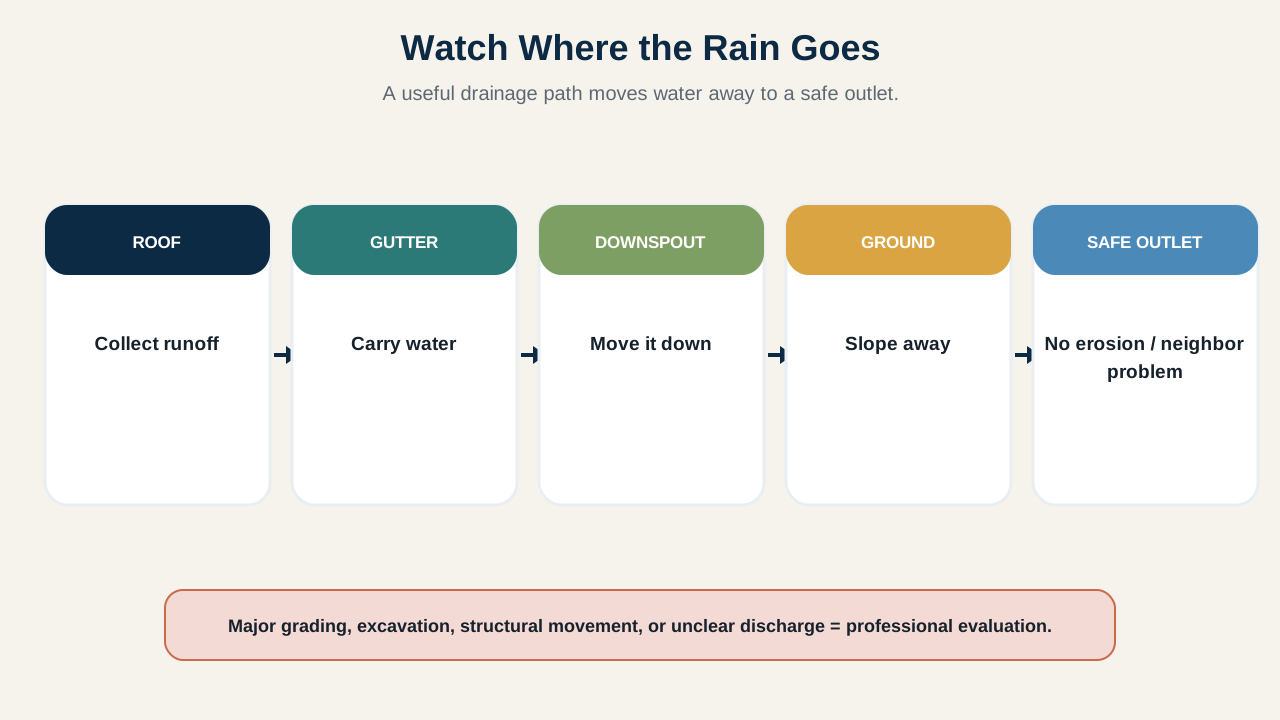
Foundation drainage doesn’t start with waterproofing products. It starts with a simple question: where does the rain go after it hits the property? Follow the path: roof, gutter, downspout, ground surface, safe outlet. Then compare that path with any indoor moisture evidence. Before the next storm, checking your gutters and downspouts is the fastest way to confirm the water reaching the ground near your foundation is actually being carried away from it.
If water is being delivered to the foundation, correct the surface problem where it’s safe and straightforward. If the source is unclear or the repair requires significant grading, excavation, structural work, or subsurface drainage, bring in the right professional. The goal isn’t to keep the yard perfectly dry. It’s to keep water from being repeatedly concentrated against the house.
Sources and further reading
We prioritize primary and authoritative sources. The sources below support the factual and technical guidance used in this article.
Practical Homeownership provides general educational guidance. Home conditions, local rules, manufacturer requirements, and the appropriate professional scope can vary.