How to Test Your Sump Pump Before Heavy Rain

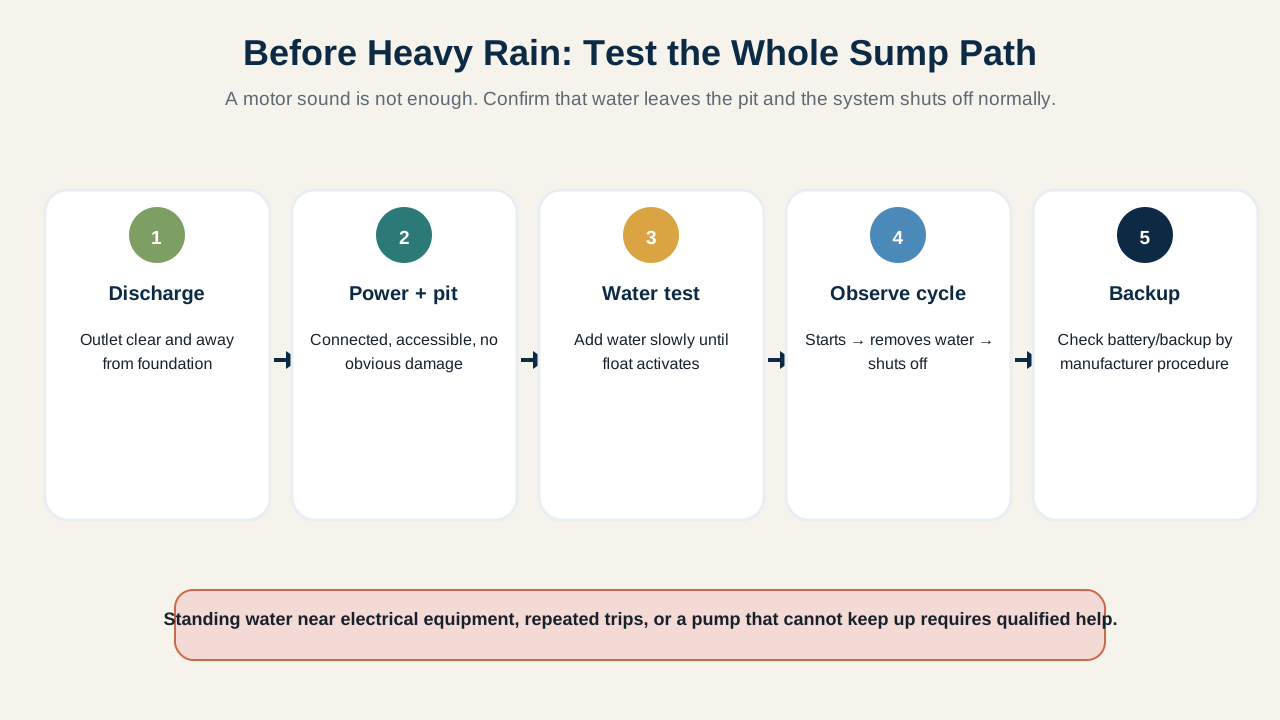
Before heavy rain, check that the discharge line outside is clear and points away from the foundation, then slowly add water to the pit and confirm the float activates the pump, the water level drops, and the pump shuts off normally -- and verify any battery backup separately, since power outages often come with storms.
A sump pump is easy to forget because, when everything is working, it may sit quietly for weeks or months. That quiet can be misleading. The time to discover a clogged discharge line, a stuck float, a dead backup battery, or a failed pump isn’t after water starts rising in the basement.
Federal and state emergency-preparedness guidance is consistent on the core point: if your home relies on a sump pump, keep it working, test it before periods of flood risk, and consider backup power, because storms that bring water can also bring power outages. For a homeowner, the practical goal is simple: confirm that water can enter the pit, trigger the pump, leave the house, and stay away from the foundation.
The short answer
Before heavy rain, snowmelt, or another period of expected water inflow:
- Check that the pump is connected to power.
- Look at the pit and accessible pump area for obvious debris or damage without putting your hands into powered equipment.
- Make sure the discharge route outside isn’t blocked, frozen, disconnected, or sending water back toward the foundation.
- Test the pump by slowly adding water to the pit until the float or level control activates the pump.
- Confirm the pump starts, lowers the water level, and shuts off normally.
- If you have a backup pump or battery system, verify it according to the manufacturer’s instructions.
- If the pump doesn’t operate normally, address the problem before the storm rather than assuming it’ll work when needed.
FEMA recommends maintaining a working sump pump and using a battery-operated backup pump to help protect a basement from flood damage. State emergency-preparedness guidance similarly tells homeowners to check sump pumps regularly and confirm they’re functioning before flooding.
What a Sump Pump Is Actually Doing
A sump system collects water at a low point, usually in a pit or basin below the basement floor. When the water rises to a set level, a float or other control activates the pump, which moves the water through a discharge pipe to an approved location away from the structure.
The system depends on several things working together: water has to reach the pit, the switch or float has to move, the pump needs power, the pump has to actually move water, the discharge pipe has to be open, and the discharge point can’t send water back toward the house. A motor that makes noise isn’t enough. The system has to complete the whole cycle.
Test Before the Weather Becomes the Test
NDSU Extension recommends checking the sump pump before flood conditions such as snowmelt or heavy rain, which is a better maintenance habit than waiting for a fixed calendar date if your wet season is approaching. A useful schedule is to test before the local wet season, before forecast heavy rain when you have enough notice, after a long period in which the pump hasn’t operated, after electrical work or basement work that may have disturbed the system, and after a previous failure or unusual pump behavior.
If your manufacturer specifies a more frequent inspection or test schedule, follow that guidance. The manufacturer controls the maintenance procedure for the specific pump.
Start With the Discharge Path
Before adding water to the pit, look at where the pumped water is supposed to go. NDSU Extension specifically recommends checking that the outlet pipe isn’t plugged or frozen and that it directs water away from the house. That check matters because a pump can run normally and still fail to protect the basement if the water has nowhere to go.
Look for a visibly disconnected pipe, crushed or damaged flexible hose, an outlet buried in snow, ice, leaves, soil, or debris, water discharging immediately against the foundation, or a route that sends water onto a flat area where it can flow back toward the house. Don’t redesign the discharge system based on generic internet advice. Local plumbing and stormwater rules vary, including where sump water may legally discharge. If the existing system appears to discharge to an inappropriate location, verify local requirements before changing it.
Look at the Pit Before You Run the Test
If the sump pit is safely accessible, look for obvious conditions that could interfere with operation: debris floating in the pit, a float blocked by an object, a loose cord, a visibly damaged pipe, obvious corrosion or physical damage, or standing water high enough to suggest the pump should already be running.
Don’t reach into a powered sump pit. For a routine pre-storm homeowner test, you usually don’t need to touch the intake at all. If inspection requires placing your hands near the pump, follow the manufacturer’s shutdown procedure and don’t work in standing water around energized equipment.
The Water Test
NDSU Extension and other public-agency guidance describe a simple functional test: slowly add water to the sump pit until the rising water triggers the float or switch. The test simulates the condition the pump is supposed to respond to during rain or groundwater inflow.
Use a bucket or another controlled water source and add water gradually. Watch for the sequence: the water level rises, the float or control moves freely, the pump starts, water leaves the pit through the discharge line, the water level drops, and the pump shuts off normally.
If the pump doesn’t start, doesn’t lower the water level, runs but moves little or no water, or doesn’t shut off, the system needs attention. Don’t keep repeating the test in hopes that a failing pump will fix itself.
What Normal Operation Should Look Like
A homeowner doesn’t need to diagnose the internal motor to recognize whether the basic cycle works. A normal functional result is: the pump activates at a rising water level, water is visibly removed from the pit, discharge appears at the expected outlet, the pit level falls, the pump shuts off when the level is low enough, and no new leakage appears at accessible pipe joints.
You may hear the pump, but sound alone isn’t proof that water is moving. Watch the water level. If the pump hums without lowering the level, unplugging, opening, or disassembling it is no longer a simple functional test. That’s a repair problem.
Check the Float Without Forcing It
Many sump pumps use a float switch. As the water level rises, the float moves and turns the pump on. A float can fail to move freely if it’s obstructed by the pit wall, a pipe, debris, or another component.
During a water test, watch whether the float moves naturally with the water level. Don’t bend, tie, wedge, or force the float into a different position to make the pump run. The switch geometry is part of the system design. If the float is catching or doesn’t trigger reliably, correct the obstruction only if the cause is obvious and safely accessible; otherwise, have the pump serviced.
Backup Power Matters Because Storms Can Cut Power
FEMA notes that a basement can flood when the primary pump fails, the power goes out, or heavy rain overloads the pump’s capacity, and recommends a battery-backup pump as an inexpensive safeguard against those failure points. A backup system is useful only if it’s ready. Depending on the system, check battery condition, charger or control status, alarm indicators, backup pump connection, and the manufacturer’s test procedure.
Don’t improvise a backup-power arrangement with extension cords, generators in enclosed spaces, or unapproved electrical connections. If a portable generator is part of your emergency plan, it must be operated safely outdoors and away from enclosed areas in accordance with generator safety guidance. For many homeowners, a dedicated battery backup is simpler because it’s designed specifically for the pump system.
A Water Alarm Adds Another Layer
A pump is an active control. A water alarm is a warning layer: if the pump can’t keep up, loses power, or fails, the alarm can give you information before water spreads farther.
Place and test any alarm according to the manufacturer’s instructions. If it uses replaceable batteries, include those batteries in the home-maintenance schedule. An alarm doesn’t replace the pump; it tells you when the water-control system may not be keeping up.
Check Where the Water Goes After It Leaves the House
A working pump can still create a loop if the discharge water returns to the foundation and flows back into the drainage system. NDSU Extension advises directing the discharge several feet away from the house to a well-drained area that slopes away from the foundation.
The exact legal and practical discharge location depends on local conditions. Don’t assume you can connect a sump discharge to a sanitary sewer, storm sewer, street, neighboring property, or septic system, since some jurisdictions prohibit certain connections. If you’re unsure, check with the local plumbing, building, public works, or stormwater authority. The homeowner question isn’t only “Does the pump run?” It’s also “Does the water actually leave the problem area?”
When the Pump Has Been Quiet for Months
A dry season can make a sump pump easy to ignore, and then the first heavy rain asks the system to work immediately. If the pump hasn’t run in a long time, a controlled water test before the wet season is especially useful. You’re confirming that the power connection is still present, the float isn’t stuck, the pump starts, the discharge line is still open, and the system shuts off correctly.
That’s a much better time to discover a problem than after the pit is already full.
Warning Signs That Deserve Service
Stop treating the issue as routine maintenance if you find the pump doesn’t start during the water test, the pump runs but the water level doesn’t fall, the pump doesn’t shut off, the float sticks or repeatedly catches, there’s unusual grinding, rattling, or other abnormal noise, the discharge line leaks or is disconnected, the electrical cord or plug is damaged, there’s visible overheating or a burning smell, the breaker or GFCI trips repeatedly, there’s heavy corrosion or physical damage, or water is rising above the normal operating range.
Don’t bypass a protective device or keep resetting electrical protection to force the pump to run. A pump that repeatedly trips electrical protection needs qualified evaluation.
Water and Electricity Change the Safety Boundary
A sump pump lives in a wet environment, but that doesn’t make electricity around standing water safe. If the basement is already flooded and electrical equipment, receptacles, cords, or the service panel may be exposed to water, don’t wade into the area to troubleshoot the pump.
If power must be shut off, do it only from a dry, safe location. If you can’t reach the electrical control without entering water, get qualified help. A sump-pump test is a preventive task; a flooded electrical area is an emergency-safety problem.
What if the Pump Can’t Keep Up?
A pump can function and still be undersized for the amount of water entering the system. If the pump runs continuously during storms but the water level keeps rising, the answer isn’t automatically a larger pump from the hardware store. The drainage system may need evaluation.
Possible questions include whether the pump capacity is appropriate, whether the discharge is restricted, whether water is being directed back toward the foundation, whether a footing-drain or groundwater problem is overwhelming the system, and whether a second pump or professionally designed backup is warranted. That crosses from routine homeowner testing into drainage-system design, where professional input matters because a failure here can have significant consequences.
A Sump-Pump Pre-Storm Table
| What you find | What it means | What to do next |
|---|---|---|
| Pump starts, removes water, and shuts off | Basic functional cycle works | Keep system accessible and monitor during severe weather |
| Pump does not start | Power, switch, or pump problem is possible | Check only basic safe power status; arrange service if not obvious |
| Pump runs but water level does not fall | Pumping or discharge problem is possible | Stop testing and investigate/service the system |
| Float catches | Automatic control may fail when water rises | Remove only obvious safe obstruction or have it serviced |
| Exterior discharge is blocked or frozen | Water may not leave the system | Clear safely before testing or get help |
| Water discharges back toward foundation | Water may recycle into drainage system | Correct discharge routing under local rules |
| Backup battery shows fault or low status | Backup may not work during outage | Follow manufacturer service/replacement guidance |
| No backup exists in a flood-prone basement | Power outage creates single-point failure | Consider battery backup and water alarm |
| Pump works but cannot keep up in storms | Capacity/system design may be inadequate | Seek qualified drainage or plumbing evaluation |
| Basement is already flooded near electrical equipment | Immediate electrical hazard | Stay out of the water and get qualified help |
Build the Pump Into the Home Maintenance Record
Document the system before you need it: pump make and model, approximate installation date if known, pit location, discharge location, backup type, battery type and replacement information, water-alarm location, last functional test date, service contact, and any recurring storm behavior.
Take a photo of the normal pit and discharge arrangement. That baseline helps you notice if something has moved, disconnected, or changed, a habit worth folding into the same first-time homeowner maintenance checklist you’re already keeping for the rest of the house.
This kind of pre-storm testing is one part of a broader moisture and water approach to home maintenance, and it pairs with the same pattern-first thinking in our condensation or a possible leak guide: observe first, then decide whether the source is groundwater, a plumbing leak, or ordinary condensation.
A sump pump also isn’t the same problem as a metered plumbing leak: a running water meter with no fixtures in use points to a hidden leak in the supply or drain lines, while sump activity is about groundwater and rainwater the system is designed to remove. Treating the two as the same issue can send you chasing the wrong fix.
Test the Whole Path, Not Just the Motor
The simplest sump-pump maintenance sequence is:
Power → pit → float → pump → discharge → backup
Power has to be available. The pit and float have to let the pump activate. The pump has to move water. The discharge has to carry that water away from the house. The backup has to be ready when primary power or the main pump fails.
A successful test isn’t “I heard the motor.” It’s “I watched the system move water out of the pit and shut off normally.” Do that while the basement is dry and the weather is still calm, and if the system, the discharge routing, or a recurring storm problem is beyond a simple test, our DIY or hire a professional guide can help you decide when to call for qualified help. That’s when a sump-pump problem is easiest to solve.
A sump pump handles groundwater that rises from below. It’s a different problem from surface water that never gets the chance to reach the pit. Checking drainage around your foundation after the next heavy rain rounds out the picture: gutters, downspouts, and grading on the outside, the sump system on the inside. See checking gutters and downspouts before heavy rain for the exterior half of that check.
Sources and further reading
We prioritize primary and authoritative sources. The sources below support the factual and technical guidance used in this article.
Practical Homeownership provides general educational guidance. Home conditions, local rules, manufacturer requirements, and the appropriate professional scope can vary.